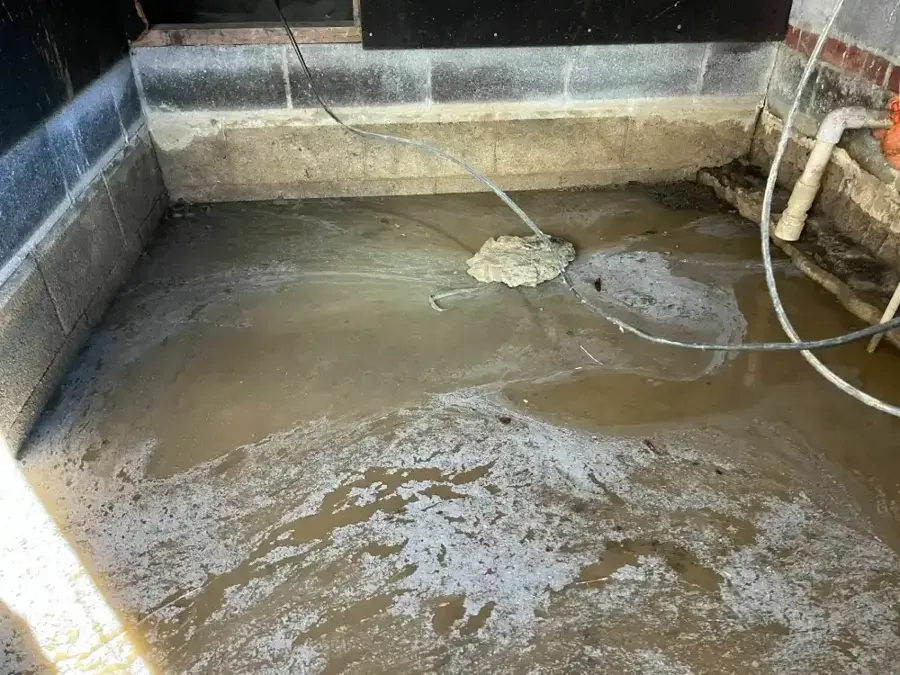
After days of atmospheric river rain, a Castro Valley home can look perfectly dry upstairs while the crawl space under the floor holds standing water. The difference between damp air and a real water loss decides what happens next.
Key takeaways
- Standing water shows as pooled water on the soil, a wet or floating vapor barrier or insulation sagging between the joists, while damp air alone leaves the soil firm and the framing dry to a meter.
- Many Castro Valley ranches and hillside split level homes from the 1950s to the 1970s sit on raised foundations, so the crawl space is the first place saturated hillsides send water.
- Shutting off the water supply only helps when a pipe is the source; runoff and groundwater keep arriving until the ground drains.
- Wet insulation comes out first, then the joists and subfloor are dried to a moisture reading, not to a calendar date.
- Water carrying hillside mud, creek overflow or sewage is handled as Category 3, which changes what is removed.
Standing water or damp air: what the crawl space is telling the owner
A crawl space is built to breathe a little, and a wet week can leave it humid without anything being wrong.
Standing water is different. It is a loss, and it keeps damaging wood and insulation every day it stays.
Signs of standing water
These are the clues a flashlight and a quick look through the access panel usually reveal.
- Pooled water or a shiny wet film across the soil.
- A vapor barrier that is floating, darkened or pushed up from below.
- Insulation sagging between joists or lying on the ground.
- A cool, spongy or bouncy patch in the floor above the wet area.
Signs of damp air only
Damp air is a humidity problem and calls for a different response.
- Firm soil with no pooling.
- Joists that read normal on a moisture meter.
- Condensation only on cold pipes or ducts.
Why Castro Valley crawl spaces take on water
A crawl space water damage call usually starts with the house itself. Castro Valley is mostly 1950s to 1970s ranches and hillside split levels on raised foundations with crawl spaces, with newer 1980s and 1990s tracts in Five Canyons and Palomares Hills.
Winters are wet and summers dry. Atmospheric river storms dump days of rain on the hills, and runoff, saturated clay soil and hillside drainage push that water toward foundations.
Castro Valley Creek, Chabot Creek, Crow Creek and Cull Creek all feed San Lorenzo Creek, so the whole area drains through the same low ground.
- The October 2021 atmospheric river and the late 2022 to early 2023 storm series brought flooding, slides and saturated hillsides across the East Bay hills.
- Hillside lots shed water quickly, and a crawl space on the downhill side collects it.
- Clay soil that is already full has nowhere to send the next day of rain.
Reading the source of the water
Not every wet crawl space has the same cause, and the source decides the cleanup. Three sources account for most calls after a storm.
A restoration crew sorts them on site, usually in the first visit, because the category of water decides what is removed and what is dried.
Runoff and groundwater
This is the usual story after atmospheric river rain. Water arrives from the hillside side of the lot, often along the foundation or through vents, and the pooling is worst at the lowest corner.
- Water enters mostly during or after heavy rain.
- The pooling stops, or slows, when the ground drains.
A supply pipe or a failed fitting
If the water keeps arriving with no rain, a pressurized pipe may be leaking. Older galvanized steel supply pipe is common in 1950s and 1960s homes in the area.
- The water meter keeps moving with every fixture closed.
- The wet area is directly under a bath, kitchen or laundry.
A drain or sewer failure
Cast iron drains and older clay or cast iron sewer laterals can crack. The water is dark, has an odor and is Category 3 from the start.
When the water is not clean
Runoff from a hillside carries soil, and creek overflow carries more than soil. Either one is treated as Category 3 water, so wet materials are removed instead of dried in place.
Sewage is the same. If a drain or lateral failed under the house, the cleanup adds containment and antimicrobial treatment.
The storm water damage page explains how storm driven water is sorted by source.
- Clean supply water can often be dried in place.
- Runoff, creek water and sewage call for removal and treatment.
- The source decides which category applies, and the crew confirms it on site.
What to do before the crew arrives
Safety comes first, because a flooded crawl space can hide wiring, ducts and sharp debris.
- Stay out of the crawl space while water is standing, and keep children and pets away from the access panel.
- Turn off power to wet circuits at the panel only if the panel is dry and reachable.
- Shut off the main water supply if a pipe could be the source, then check whether the meter keeps moving.
- Photograph the access panel view, the water level and any wet insulation for the claim.
- Move gutter downspouts so they discharge well away from the foundation.
What gets pumped and removed first
Order matters, because wet insulation holds water against the wood long after the pooling is gone.
Pump out the standing water
The water is pumped out with water extraction equipment first, with the source identified as supply, runoff or groundwater.
Pull wet insulation and the vapor barrier
Wet insulation is heavy, slow to dry and removed rather than saved. A torn or soaked vapor barrier is removed so the soil and framing can release moisture.
Dry the joists and subfloor
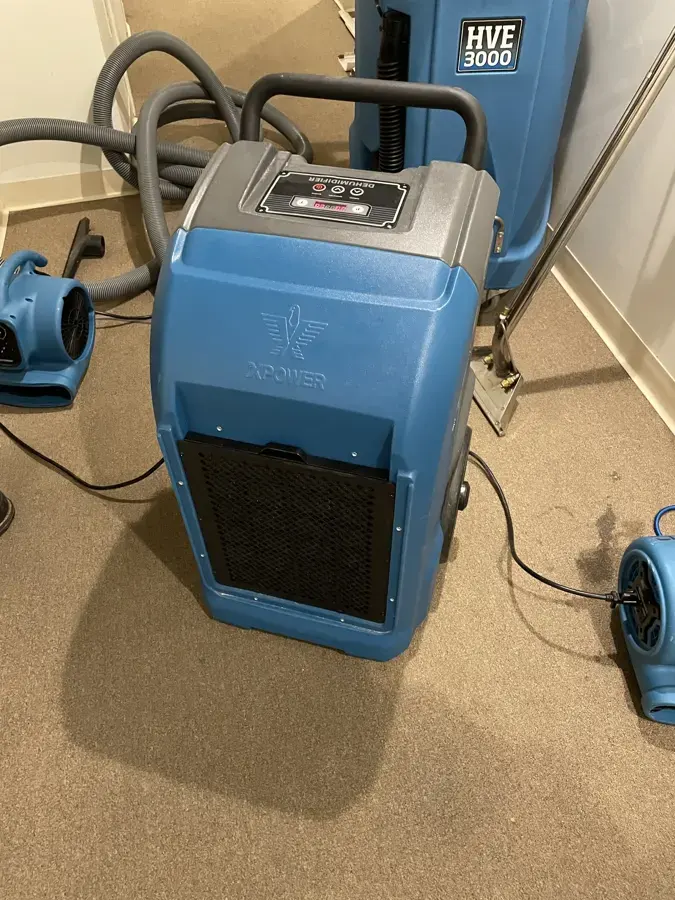
Joists and subfloor are measured with moisture meters and dried with air movers and dehumidifiers until readings return to normal. Hardwood above a wet crawl space is checked for cupping.
Effects that show up in the rooms above
A wet crawl space rarely stays a crawl space problem. Moisture rises into the floor system, and the first signs show up inside the house.
- Hardwood that cups, crowns or gaps along the seams.
- Doors and cabinets that begin to stick for no clear reason.
- A musty smell that is strongest near floor vents.
- Warm, damp air from floor registers if ducts run under the house.
- Baseboards that stain or swell along exterior walls.
Drying to a reading, then preventing the next round
Drying is finished when the meters say so. Structural drying of a crawl space typically runs for days, with daily readings on the joists, subfloor and walls above.
Prevention is mostly about moving water away before it reaches the foundation.
- Keep gutters clear and downspout extensions pointing downhill and away from the house.
- Watch for soil that slopes toward the foundation after a wet winter.
- Check the crawl space after the first big storm of the season, not the last.
Questions
How can a homeowner tell if a crawl space has standing water?
Look through the access panel with a flashlight for pooled water, a wet or floating vapor barrier and sagging insulation. A spongy spot in the floor above is another clue. A moisture meter on the joists settles any doubt.
Does water in a crawl space mean a pipe broke?
Not always. After atmospheric river rain, runoff and saturated soil are common sources. A meter that keeps turning with every fixture off points to a supply pipe, and the crew traces the source on site.
Should an owner go into a flooded crawl space?
No. Standing water can hide wiring and debris, and the air can be unhealthy. The crew enters with protective equipment and pumps first.
Is water in a crawl space after a storm covered by insurance?
It depends on the policy and the source. Many policies treat sudden pipe failure differently from surface runoff or groundwater, so reading the policy wording or asking the insurer is the safest step.
How long does a wet crawl space take to dry?
It depends on how long the water stood, how much insulation was wet and what the readings show. Crews dry to a moisture reading rather than a set number of days.
Will a crawl space dry out by itself once the rain stops?
Sometimes the pooling drains away, but wet insulation and wood stay wet for much longer. Leaving it risks warped floors and decay, so readings on the joists and subfloor are the better test.