Roof Leak Water Damage in Castro Valley, CA
Winter storms find worn flashing, cracked vent boots and tired valleys. The restoration team tarps the opening, pulls wet attic insulation and dries the attic, ceilings and walls to the IICRC S500 goal.
(888) 774-9605Get the roof leak tarped and dried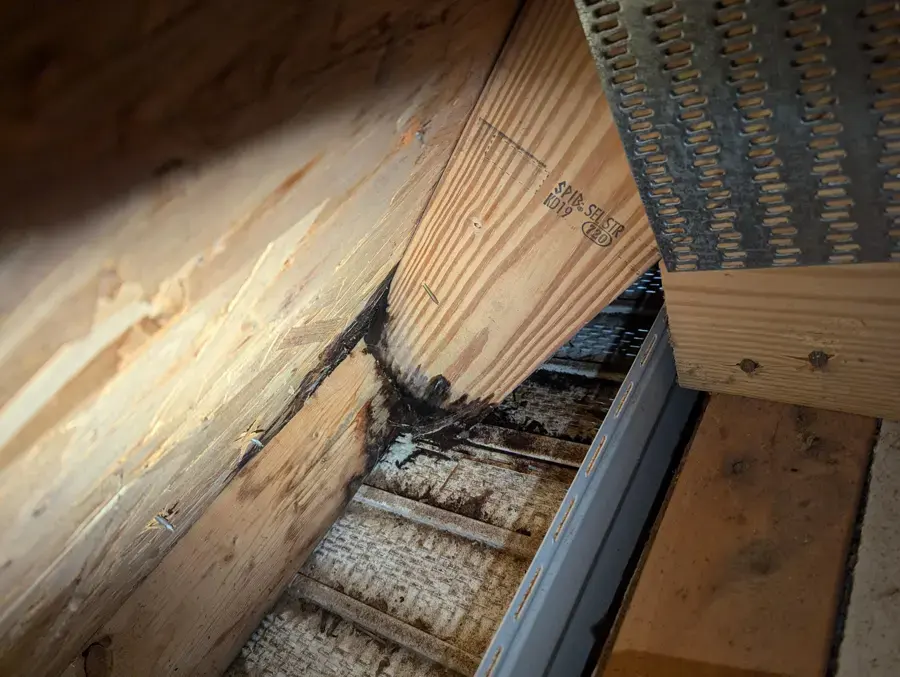 24/7 · Castro Valley
Roof Leak Water Damage at a glance in Castro Valley
First steps for roof leak water damage in Castro Valley
- 1
Catch the water inside
Buckets and plastic sheeting under the drip protect floors.
- 2
Do not climb on a wet roof
Leave rooftop work to a roofer or a tarp crew.
- 3
Check the attic if safe
Look for wet insulation from the hatch with a flashlight.
- 4
Photograph the stain and the roof
Photos help the roofer and the claim file.
Many Castro Valley roofs date from the original 1950s to 1970s construction or a reroof decades later. Long dry summers crack sealant and dry out shingles, and the first big winter storm finds every weak spot. Hillside homes take wind-driven rain on one face, which pushes water under flashing that holds in calm weather.
Where roof leaks start
- Step and counter flashing at walls and chimneys
- Valleys where two roof planes meet
- Plumbing vent boots and skylight curbs
- Flat or low-slope sections over additions and patios
What does roof leak water damage cost in Castro Valley, CA?
In Castro Valley, CA, roof leak water damage typically runs $1,000 to $9,000 for tarping and interior drying, depending on how much insulation and ceiling got wet. The roof repair is separate.
Small leak, one ceiling
$1,000 to $3,500
- Emergency tarp
- Moisture mapping
- In-place drying
Attic and ceiling
$3,500 to $9,000
- Insulation removal
- Ceiling drywall removal
- Attic drying
Several rooms below
$8,000 to $20,000
- Walls and flooring
- Multiple drying zones
- Extended monitoring
Ranges are typical, not a quote: category of water, square footage, material class and how fast drying started move the number most. Run the Castro Valley water damage cost calculator for a closer range.
The roof leak water damage process in Castro Valley, step by step
- 1
Tarp the opening
A temporary cover stops new water from getting in.
- 2
Inspect the attic
Meters and thermal imaging map wet sheathing and insulation.
- 3
Remove wet insulation
Soaked insulation and sagging drywall come out.
- 4
Dry attic and rooms
Equipment runs above and below until readings are dry.
The attic is the first stop
Roof water hits the sheathing and rafters first, then soaks the attic insulation before it reaches the ceiling. Blown-in or batt insulation that gets wet packs down, holds water against the drywall and loses its insulating value, so the mitigation team removes it. Sheathing and rafters are dried with air movers and a dehumidifier in the attic.
Ceilings and walls below
Water that gets past the insulation stains and softens the ceiling and can run down inside walls. Sagging drywall is opened and the joist bays dried. Wall cavities under the leak are checked with meters. The roof itself is repaired by a roofer; the restoration team covers the tarp and the interior.
- Emergency tarp over the opening until the roofer arrives
- Ceiling drywall dried in place when it held its shape
Seasonal checks
A look at the attic after the first storm catches small leaks early. For attic insulation and ventilation basics, see the Energy Saver site, and track incoming storms through the National Weather Service.
Roof leak water damage across Castro Valley and the Eden Area
The Castro Valley restoration crew covers ZIP 94546 and 94552, from Castro Valley Village and the Boulevard to Five Canyons, Palomares Hills, Jensen Ranch and the homes along Lake Chabot Road and Crow Canyon Road.
Nearby coverage reaches San Leandro, Hayward, Fairview, San Lorenzo, Ashland and the rest of the Eden Area.
See every Castro Valley neighborhood and nearby town covered
Related water damage services in Castro Valley
Should I call a roofer or a restoration company first?
Both. The restoration team can tarp and start drying the interior while the roofer schedules the permanent repair.
Does wet attic insulation have to be replaced?
Usually, yes. Wet insulation packs down, holds water against the ceiling and loses its insulating value.
Why does my roof leak only in big storms?
Wind-driven rain pushes water sideways under flashing and shingles that shed normal rain. Long storms also saturate worn materials.
How long does roof leak drying take?
Most attic and ceiling drying takes three to six days once the roof is covered and wet insulation is out.
Does insurance cover roof leak damage?
Sudden storm damage is often covered, but wear and tear usually is not. Coverage depends on your policy, so check with your own insurer.
Can a ceiling stain be painted over?
Only after the leak is fixed and the drywall reads dry. Painting a wet ceiling hides a problem that keeps growing.
Roof leaking in Castro Valley?
The restoration team covers the opening, removes the wet insulation and dries the attic and rooms to a reading.
Castro Valley Water Damage Restoration · Castro Valley, CA