Slab Leak Water Damage in Castro Valley, CA
A pipe leaking under a concrete slab soaks flooring from below. The restoration team maps the wet area with thermal imaging, lifts what cannot dry and dries the slab edge, walls and floors to the IICRC S500 standard.
(888) 774-9605Call before the water reaches the walls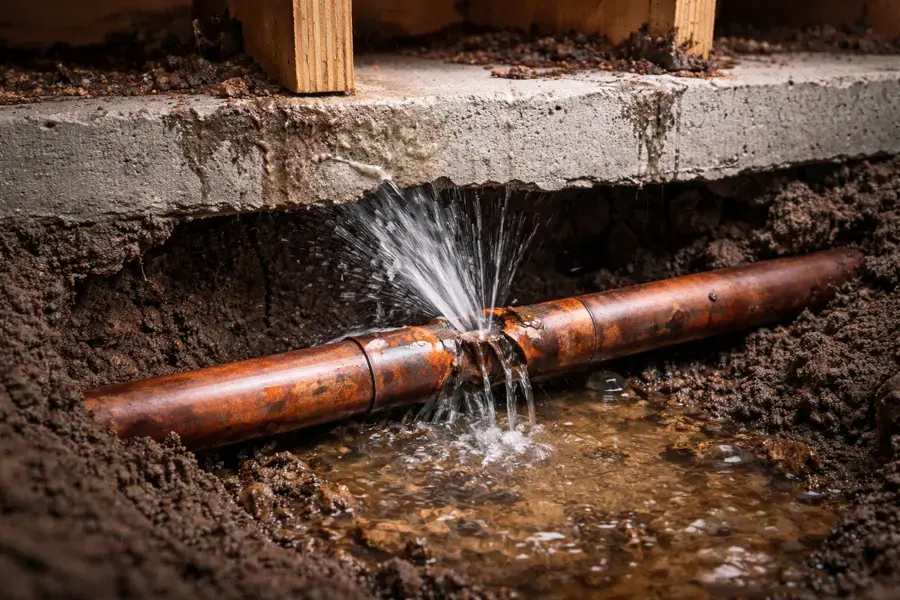 24/7 · Castro Valley
Slab Leak Water Damage at a glance in Castro Valley
First steps for slab leak water damage in Castro Valley
- 1
Close the main shutoff
Stop the leak while the plumber confirms where it is.
- 2
Turn off the water heater
If the warm spot points to a hot line, shut the heater off.
- 3
Pull up rugs and items
Get belongings off the damp floor area.
- 4
Photograph the floor
Capture stains, lifting boards and warm spots before work starts.
Most older Castro Valley homes sit on raised foundations, but slab-on-grade construction shows up in many later tracts, room additions, converted garages and condos. In those slabs, copper water lines run through or under the concrete. When one develops a pinhole, the water spreads under the flooring before anyone sees it.
Signs of a slab leak
- A warm spot on the floor, often from a hot water line
- The sound of running water with every fixture off
- Damp carpet, lifting laminate or loose tile in one area
- Baseboards or drywall bottoms wicking water from the floor
- A water bill that jumps with no change in use
What does slab leak water damage cost in Castro Valley, CA?
In Castro Valley, CA, slab leak water damage typically runs $1,500 to $11,000 for mitigation and drying, depending on the flooring type, how far the water spread and how long it ran. The plumbing repair is separate.
Small area, tile or vinyl
$1,500 to $4,500
- Thermal mapping
- Baseboard removal
- Slab drying
Carpet or laminate rooms
$4,500 to $11,000
- Pad and laminate removal
- Wall bottom drying
- Cabinet toe kicks
Long-running, several rooms
$10,000 to $25,000
- Flooring removal across rooms
- Desiccant drying
- Extended monitoring
Ranges are typical, not a quote: category of water, square footage, material class and how fast drying started move the number most. Run the Castro Valley water damage cost calculator for a closer range.
The slab leak water damage process in Castro Valley, step by step
- 1
Map the wet slab
Thermal imaging and meters outline the water under the floor.
- 2
Lift trapped flooring
Pad, laminate and swollen boards come up so the slab can dry.
- 3
Open wall bottoms
Baseboards and toe kicks come off where water wicked.
- 4
Dry and log
Dehumidifiers run until the slab and walls read dry.
Mapping the water under the floor
The restoration team uses thermal imaging to see the warm or cool pattern the water leaves, then confirms with moisture meters at the flooring, baseboards and wall bottoms. That map tells the plumber where the leak likely sits and tells the drying team how far the water traveled.
What comes up and what stays
Carpet pad over a wet slab usually comes out. Laminate and engineered flooring that has swelled is removed, because water trapped under it cannot dry. Tile can often stay if the grout and thinset dry out. Wall bottoms and cabinets along the wet area are opened so air can reach them.
- Baseboards removed along every wet wall
- Toe kicks opened under kitchen and bath cabinets
- Slab surface dried with dehumidifiers and air movers
Drying a concrete slab
Concrete releases water slowly, so slab losses often run longer than a carpet loss of the same size. LGR dehumidifiers and air movers run around the clock, and desiccant units help when readings stall. For background on hidden leaks see EPA WaterSense and the Energy Saver site on hot water use.
Slab leak water damage across Castro Valley and the Eden Area
The Castro Valley restoration crew covers ZIP 94546 and 94552, from Castro Valley Village and the Boulevard to Five Canyons, Palomares Hills, Jensen Ranch and the homes along Lake Chabot Road and Crow Canyon Road.
Nearby coverage reaches San Leandro, Hayward, Fairview, San Lorenzo, Ashland and the rest of the Eden Area.
See every Castro Valley neighborhood and nearby town covered
Related water damage services in Castro Valley
How do I know if I have a slab leak?
Warm spots on the floor, running water sounds with fixtures off, damp flooring and a rising water bill are the usual signs. A plumber confirms the leak location.
Do Castro Valley homes have slab leaks?
Homes on raised foundations do not, but many later tracts, additions, converted garages and condos are built on slabs with copper lines inside.
Does all the flooring have to come up?
Not always. Tile can often stay. Pad, laminate and engineered flooring that trapped water usually come out so the slab can dry.
How long does a slab take to dry?
Usually four to eight days after the leak is fixed. Concrete gives up water slowly, so readings decide.
Who repairs the leak under the slab?
A plumber repairs or reroutes the pipe. The restoration team handles the wet flooring, walls and drying.
Does insurance cover slab leak water damage?
Policies often cover the resulting water damage but treat the pipe repair and access differently. Coverage depends on your policy, so check with your own insurer.
Warm wet floor in Castro Valley?
The restoration team finds how far the water traveled, lifts what traps it and dries the slab to a reading.
Castro Valley Water Damage Restoration · Castro Valley, CA