Galvanized Pipe Leak Cleanup in Castro Valley, CA
Galvanized steel pipe from the 1950s and 1960s rusts from the inside out. The mitigation team traces the hidden wet area, removes what has soaked too long and dries walls, floors and crawl spaces to a reading.
(888) 774-9605Get the leak traced and dried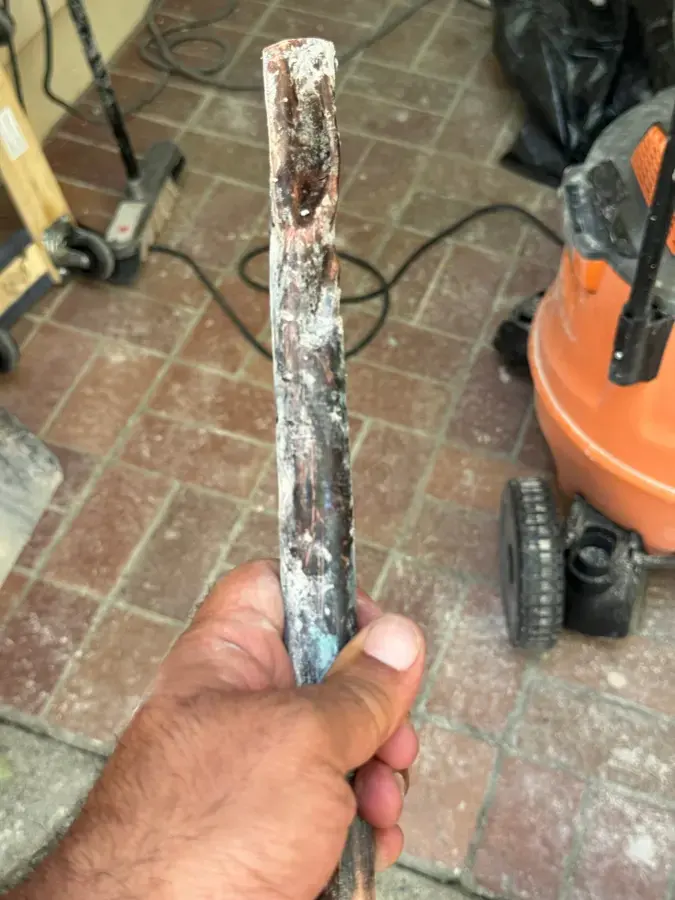 24/7 · Castro Valley
Galvanized Pipe Leak Cleanup at a glance in Castro Valley
First steps for galvanized pipe leak cleanup in Castro Valley
- 1
Close the nearest valve
Use the fixture stop or the main shutoff to stop the drip.
- 2
Note the color of the water
Rusty water at a tap helps the plumber find the bad section.
- 3
Do not open walls yourself
Readings show where to open, and photos come first.
- 4
Check the crawl space hatch
Look for wet soil or dripping under the leak area.
Many Castro Valley homes built in the postwar boom still carry their original galvanized steel supply pipe. Zinc coating wears away inside, rust builds up, and the weakest spots fail first: the threaded joints and the thin wall just behind them. The result is rarely a gusher. It is a slow leak that wets a wall cavity or the crawl space for weeks before anyone notices.
Signs of a hidden galvanized leak
- Brown or rust-tinted water at a faucet after the water sits
- A wall that feels cool or looks stained near a bathroom or kitchen
- Baseboards that swell or flooring that lifts along one wall
- A water bill that climbs with no change in use
- Damp soil or wet insulation under one part of the house
What does galvanized pipe leak cleanup cost in Castro Valley, CA?
In Castro Valley, CA, galvanized pipe leak cleanup typically runs $1,000 to $9,000, depending on how long the leak ran, how far the water traveled and how much material has to come out.
Single joint, found early
$1,000 to $3,500
- Leak mapping
- Small wall opening
- Drying setup
Hidden wall leak
$3,500 to $9,000
- Drywall and insulation removal
- Antimicrobial where needed
- Wall cavity drying
Long-running or several leaks
$8,000 to $20,000
- Subfloor and cabinet removal
- Crawl space drying
- Extended monitoring
Ranges are typical, not a quote: category of water, square footage, material class and how fast drying started move the number most. Run the Castro Valley water damage cost calculator for a closer range.
The galvanized pipe leak cleanup process in Castro Valley, step by step
- 1
Trace the pipe route
Thermal imaging and meters follow the water from the leak.
- 2
Open and remove
Long-wet drywall, insulation and baseboard come out.
- 3
Treat and dry
Antimicrobial goes on where needed, then equipment runs.
- 4
Verify dry
Readings confirm the framing hit the goal before rebuild.
Why slow leaks need more removal
Water that sits for weeks soaks deeper than a sudden break. Drywall softens, insulation slumps and wood near the leak can start to break down. By then clean water has often aged to Category 2, so the restoration team removes more and adds antimicrobial where it is called for. Mold can start growing within 24 to 48 hours of wetting, which is one more reason long-wet materials come out rather than being dried in place.
Tracing the wet area
The tech who does the walkthrough follows the pipe route with thermal imaging and pinless meters, then confirms with pin readings. The map often shows water traveling farther than the stain, down a stud bay or along a joist.
- Bathrooms and kitchens back to back are checked together
- The crawl space under the leak is inspected for wet soil and framing
Repiping and the drying plan
A plumber decides whether to fix one joint or replace the line. The drying plan works around that schedule. EPA notes that older galvanized pipe can hold lead in some systems; see EPA lead information and EPA WaterSense on finding leaks.
Galvanized pipe leak cleanup across Castro Valley and the Eden Area
The Castro Valley restoration crew covers ZIP 94546 and 94552, from Castro Valley Village and the Boulevard to Five Canyons, Palomares Hills, Jensen Ranch and the homes along Lake Chabot Road and Crow Canyon Road.
Nearby coverage reaches San Leandro, Hayward, Fairview, San Lorenzo, Ashland and the rest of the Eden Area.
See every Castro Valley neighborhood and nearby town covered
Related water damage services in Castro Valley
How do I know if my house has galvanized pipe?
Galvanized pipe is dull gray steel with threaded fittings. A magnet sticks to it, unlike copper or plastic. Many Castro Valley homes from the 1950s and 1960s still have it.
Why do galvanized pipes leak?
The zinc coating wears away inside and the steel rusts. Threads are the thinnest part of the pipe, so joints usually fail first.
Is a slow leak worse than a burst pipe?
It can be. A slow leak runs unseen for weeks, so the water soaks deeper and more material usually comes out.
Does the restoration team replace the pipe?
No. A plumber repairs or repipes. The restoration team handles the wet structure and the drying.
Will insurance cover a slow galvanized leak?
Many policies treat long-term leaks differently from sudden ones. Coverage depends on your policy, so check with your own insurer.
Why does my water look rusty?
Rust from the inside of old galvanized pipe breaks loose, especially after the water sits overnight or after a pressure change.
Rusty pipe leaking in Castro Valley?
The mitigation team maps the hidden water, removes what soaked too long and dries the rest to the standard.
Castro Valley Water Damage Restoration · Castro Valley, CA