Structural Drying and Dehumidification in Castro Valley, CA
Structural drying goes past the surface to the framing, subfloor and wall cavities. The drying team maps moisture, sizes equipment to each room and logs readings daily until the structure meets the dry goal.
(888) 774-9605Get the dryers running in your house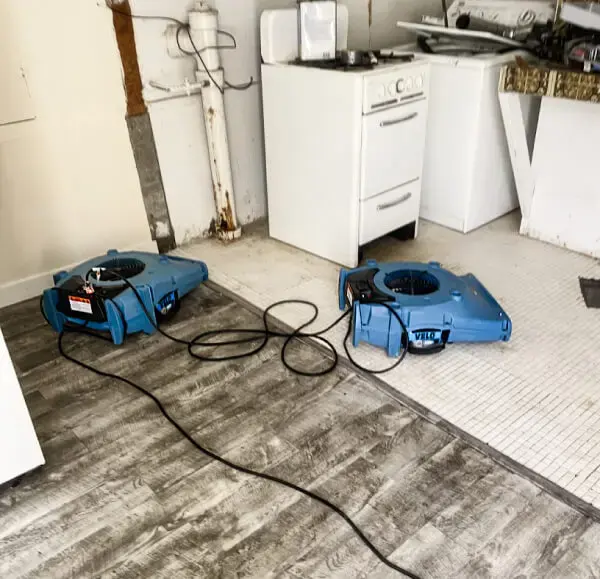 24/7 · Castro Valley
Structural Drying and Dehumidification at a glance in Castro Valley
First steps for structural drying and dehumidification in Castro Valley
- 1
Keep the equipment running
Air movers and dehumidifiers work around the clock.
- 2
Keep windows closed
Damp outdoor air slows indoor drying in storm season.
- 3
Leave openings open
Vent holes and removed baseboards let cavities breathe.
- 4
Do not reinstall early
Flooring and paint wait for the dry readings.
Surfaces dry fast. Framing, subfloor, hardwood and concrete do not. Structural drying is the part of water damage restoration that makes sure the hidden parts of the house are dry before anything is closed up, which is what prevents warped floors, odors and growth later.
How the drying plan is built
The drying team starts with a moisture map and a dry reference reading from an unaffected part of the house. Each room gets a class of loss, which sets how much equipment it needs.
- Air movers set to the room's evaporation load
- LGR dehumidifiers to pull water out of the air
- Desiccant dehumidifiers for dense materials and cool spaces
- Floor drying mats for solid hardwood
What does structural drying and dehumidification cost in Castro Valley, CA?
In Castro Valley, CA, structural drying typically runs $1,500 to $10,000, depending on how many rooms need equipment, how many days it runs and whether hardwood, crawl spaces or slabs are involved.
One or two rooms
$1,500 to $4,000
- Air movers and LGR
- Daily readings
- Three to five days
Several rooms or hardwood
$4,000 to $10,000
- Floor drying mats
- Multiple drying zones
- Crawl space equipment
Large or dense losses
$10,000 to $25,000
- Desiccant dehumidifiers
- Slab or whole-floor drying
- Extended monitoring
Ranges are typical, not a quote: category of water, square footage, material class and how fast drying started move the number most. Run the Castro Valley water damage cost calculator for a closer range.
The structural drying and dehumidification process in Castro Valley, step by step
- 1
Map and set a dry reference
Readings show what is wet and what dry looks like.
- 2
Set the equipment
Air movers, dehumidifiers and mats go where the map points.
- 3
Log daily
Temperature, humidity and moisture readings are recorded every day.
- 4
Verify and remove
Gear comes out when materials meet the dry goal.
Psychrometrics, in plain words
Drying is a balance of temperature, humidity and airflow. The team logs those numbers daily inside and outside the drying area. If the readings stall, equipment is moved or added. In a damp Castro Valley winter, outdoor air is often too wet to help, so the house is kept closed and dehumidified.
Castro Valley materials
Older homes bring their own drying problems. Crawl spaces need their own equipment. Solid oak floors over a raised subfloor can often be saved with mats if drying starts early. Slabs in additions and condos release water slowly and may need desiccant drying.
- Joists and subfloor dried from the crawl space side
- Wall cavities dried through small vent holes when possible
Knowing when it is dry
Equipment leaves when materials read within 2 to 4 points of the dry reference, not on a set date. For indoor humidity basics, see the EPA indoor air quality pages, and for worker safety in wet buildings, the OSHA flood cleanup page.
Structural drying and dehumidification across Castro Valley and the Eden Area
The Castro Valley restoration crew covers ZIP 94546 and 94552, from Castro Valley Village and the Boulevard to Five Canyons, Palomares Hills, Jensen Ranch and the homes along Lake Chabot Road and Crow Canyon Road.
Nearby coverage reaches San Leandro, Hayward, Fairview, San Lorenzo, Ashland and the rest of the Eden Area.
See every Castro Valley neighborhood and nearby town covered
Related water damage services in Castro Valley
What is structural drying?
Drying the hidden structure, such as framing, subfloor, wall cavities and concrete, not just the surfaces. It is the core of the IICRC S500 standard.
Why is the equipment so loud?
Air movers push large volumes of air across wet surfaces to speed evaporation. The noise is the drying working.
Can hardwood floors be saved?
Often, if drying starts early. Floor drying mats pull water up through solid hardwood. Boards that stay cupped after drying are replaced.
Why not just open the windows?
In storm season the outdoor air is often wetter than the indoor air. Dehumidifiers dry the air faster in a closed house.
How long does structural drying take?
Most losses dry in three to seven days. Hardwood, slabs, crawl spaces and late starts take longer.
Who decides when it is dry?
The readings do. Materials must reach 2 to 4 points of a dry reference material before equipment is removed.
Still wet in Castro Valley? Start the drying.
The drying team maps the moisture, sizes the equipment and logs readings until the structure is dry.
Castro Valley Water Damage Restoration · Castro Valley, CA