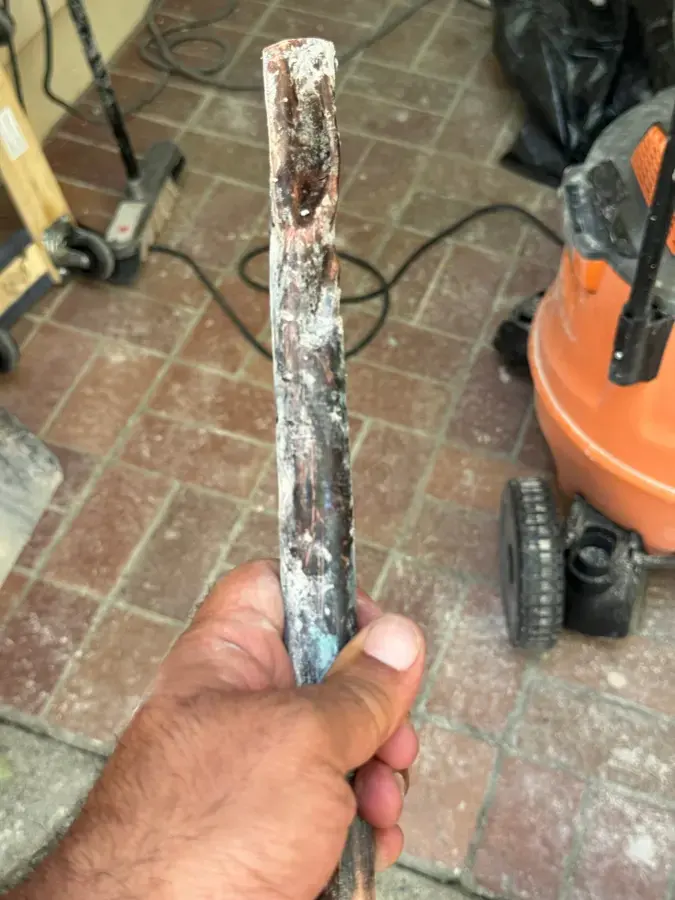
A slow leak does not announce itself. In an older Fremont home it can run for weeks inside a wall, and the first clue is often a bill, a stain or a smell.
Key takeaways
- Centerville has large subdivisions developed in the 1950s and 1960s, including Glenmoor Gardens and Cabrillo Park, so older supply pipe is worth checking in homes of that era.
- That is an inference about age, not a finding about any one house. The pipe material is confirmed on site.
- A water meter that keeps moving when every fixture is off is the simplest sign of a hidden leak.
- Fremont freezes are rare, so a burst pipe there is usually about aging pipe and fittings.
- Hidden leaks are dried through small openings first, and walls are opened only where the readings say.
What a slow leak looks like
The pattern is the same in most houses. A tiny amount of water escapes from a pipe, the surrounding material soaks it up slowly, and the damage grows quietly.
By the time a stain appears, the wet area behind it is usually larger than the stain.
Most slow leaks are found by accident. Something small changes, and the change keeps going.
- A water bill that climbs with no change in use.
- Stained or swollen baseboards, especially on an interior wall.
- A cabinet base that smells musty or feels soft.
- Paint that bubbles or wallpaper that lifts.
- The sound of running water when everything is off.
Why the Centerville subdivision era matters
Centerville has large subdivisions developed in the 1950s and 1960s, including Glenmoor Gardens and Cabrillo Park. Homes of that era have had decades of use on their original plumbing, unless it has been replaced.
Older supply lines in homes of that age are worth checking for slow leaks. That is an age based inference, not a Fremont finding, and nothing here claims a particular pipe material for any one house.
Centerville is one of the former towns that unified into the city of Fremont, and its subdivisions are part of Fremont's postwar growth.
- Look at the pipe where it is visible, such as a garage, a crawl space or under a sink.
- Ask the owner or a plumber whether the house has been repiped.
- Treat a home that has never been repiped as a candidate for a closer look.
Finding the leak: the meter test and moisture readings
Two steps find most hidden leaks.
The meter test
The Alameda County Water District supplies water to Fremont. The test is simple and works at any water meter.
- Turn off every faucet, appliance and irrigation system.
- Find the water meter and watch the small leak indicator or dial.
- If the dial keeps moving, water is flowing somewhere.
- Check again after shutting the main valve at the house. If the dial then stops, the leak is inside the house.
Moisture readings
A moisture meter and a thermal camera find where the water is, even behind paint. The crew reads walls, floors and cabinet bases along the suspected route.
When the meter test is not enough
A leak that is small, intermittent or on one fixture can be missed by a meter. In that case the crew follows the symptoms: the wet baseboard, the cabinet, the floor edge.
Readings taken along the likely route of the pipe narrow the search without opening walls blindly.
First steps when a leak is found
Every house has a main valve, and finding it before an emergency saves time. It is usually where the supply enters the house, such as a garage wall, a utility room or near the water heater.
The first job is to stop the water, and the second is to record what happened.
The Fremont water damage pages cover the response for owners and renters across the city.
- Shut the main valve at the house.
- Turn off the water heater if a hot pipe is involved.
- Photograph the stain, the meter and any damaged materials.
- Call a plumber to locate and fix the leak.
- Call for galvanized pipe leak cleanup to dry the wet cavity before it spreads.
Slow leak or burst pipe in Fremont
Fremont freezes are rare. The lowest temperature on record was 21 F on December 23, 1990, so a burst pipe there is usually about aging pipe and fittings, not ice.
A burst is sudden and obvious, with water spraying or pooling. The burst pipe water damage page covers that emergency response.
- A slow leak shows damage over days or weeks.
- A burst shows damage quickly, often the same night.
- Both are dried the same way once the water is stopped.
- A slow leak gives time to find a plumber, while a burst needs the main valve shut at once.
What cleanup involves for a hidden leak
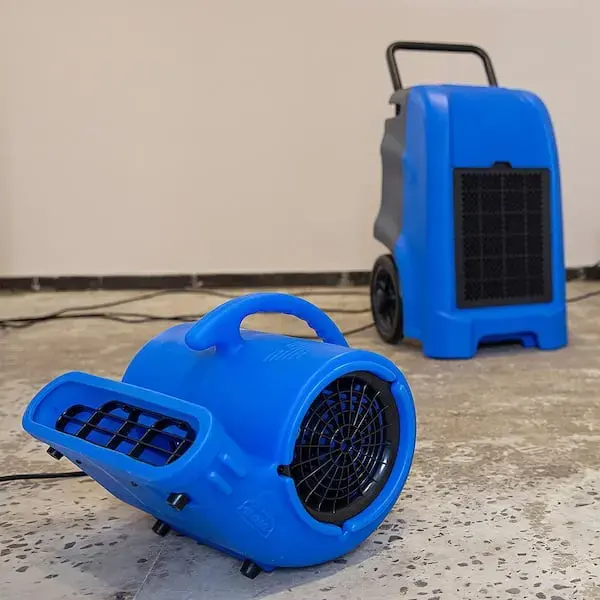
A hidden leak is dried to readings, not by guesswork. The meters set how long the equipment stays and where it goes.
The aim is to dry without tearing out more than necessary.
Equipment typically runs for several days and is checked each day. The readings, not a calendar date, show when the wall and cabinet base are dry.
Small openings first
Small inspection holes show whether the cavity is wet. Larger openings follow only where the readings require them.
Drying the cavity
Air movers and dehumidifiers dry the wall cavity, the cabinet base and the floor edge until the readings return to normal.
Deciding what stays
Drywall that stayed wet for a long time is removed. Insulation that holds water is removed as well.
Solid wood trim often dries and stays.
Insurance and records
Policies often treat a sudden pipe failure differently from a long running leak. A dated record of when the first sign appeared helps explain the timeline.
The main galvanized pipe leak cleanup page shows how the same work is done across the area.
A leak that runs unnoticed for a long time can be treated differently from a sudden one. Asking the insurer which category applies, before repairs start, avoids surprises.
- Save the water bills that show the rise in use.
- Keep the plumber's repair note.
- Ask for the final moisture readings.
Questions
How can a homeowner tell there is a leak inside a wall?
Common signs are a rising water bill, a stained or swollen baseboard and a musty smell. A meter that keeps moving with every fixture off confirms water is flowing somewhere.
Why are older Fremont homes checked more closely?
Centerville subdivisions such as Glenmoor Gardens and Cabrillo Park were developed in the 1950s and 1960s, so original supply pipe is worth checking. The pipe material in any one house is confirmed on site.
Does a small leak need professional drying?
Often yes. Even a small leak can soak a wall cavity and cabinet base, and surface drying leaves moisture inside. Readings show whether the cavity is dry.
Do Fremont pipes burst from freezing?
Rarely. The lowest temperature on record was 21 F on December 23, 1990, so burst pipes in Fremont are usually about aging pipe and fittings.
Who supplies water to Fremont?
The Alameda County Water District supplies water to Fremont, Newark and Union City.
What is the first step when a leak is suspected?
Shut the main valve at the house, then call a plumber to locate the leak. Drying the wet area follows once the water has stopped.