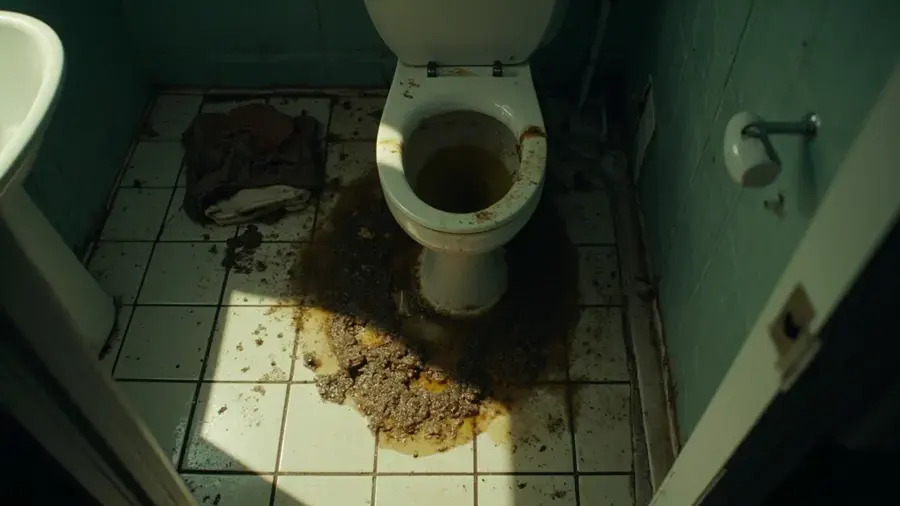
When a toilet gurgles and a tub fills with sewage, the first question in Hayward is usually whose pipe it is. The answer decides who calls whom, and how fast the cleanup can start.
Key takeaways
- In Hayward the City does not service lateral sewers; under Municipal Code Section 11-3.060 the property owner maintains the building sewer.
- The city checks the public sewer main when a plumber verifies that the main is plugged or causing the stoppage.
- City handbook language says old laterals crack at joints from age and ground shifts, attract tree roots and then block.
- A backup is Category 3 water, so contaminated materials are removed, not dried in place.
- Stopping use of all drains right away limits how much sewage enters the house.
Whose pipe is it?
The City of Hayward does not service lateral sewers. Under Municipal Code Section 11-3.060, the property owner maintains the building sewer, the pipe that runs from the house to the public main.
That puts the first responsibility for a blockage on the owner and the owner's plumber.
Where the owner's responsibility ends and the city's begins
The City of Hayward owns and operates its own Water Pollution Control Facility, so the public system is the city's from the main onward.
Everything between the house and the connection to the public main belongs to the property. That is the part owners often have never seen.
- The building sewer starts where drains leave the house.
- It ends where it connects to the public main.
- Cleanouts, the access points on that pipe, belong to the owner as part of it.
- Tree roots and cracked joints in that stretch are the owner's repair, not a city repair.
When the city checks the public main
The public sewer main is the city's part of the system. The city checks it when a plumber verifies that the main is plugged or causing the stoppage.
That sequence matters, because it means the plumber's finding starts the conversation with the city, and the Hayward water damage pages cover the rest of the response.
- A plumber clears or inspects the building sewer first.
- If the main is the cause, the plumber confirms it.
- The city then checks the public main.
- Keep any plumber's written note, because it supports both the city call and an insurance claim.
What a plumber looks for
A plumber confirms whether the problem is the building sewer or the main. The finding is the hinge for everything that follows.
- Clearing the blockage and checking how quickly it returns.
- A camera inspection of the pipe to find cracks, offsets or roots.
- A written note of where the blockage was found.
- Advice on repair or replacement of a failing section.
Why older sewer pipes fail
The city handbook explains the usual pattern in plain terms. Old laterals crack at pipe joints from age and ground shifts, leak moisture, attract tree roots and then block.
In practice that means a slow drain can be the first sign of a failing pipe, weeks before a full backup.
- A tub or shower that drains slowly after a toilet is flushed.
- Gurgling in a toilet when a washer drains.
- Wet or unusually green patches over the sewer path in the yard.
- Repeated clogs that clear and return.
Preventing the next backup
Most backups have a cause that can be reduced. The city handbook points to age, joint cracks and tree roots, and daily habits add to the load.
- Keep grease and cooking fat out of drains.
- Flush only toilet paper, and put wipes in the trash even if the package says flushable.
- Watch for slow drains, which often come before a full blockage.
- Know where the cleanout is and keep it clear and capped.
- Ask a plumber about a camera inspection of an older building sewer.
First steps when sewage backs up
Speed and caution both matter, since sewage is a health hazard.
- Stop using toilets, sinks, showers and the washer.
- Keep people and pets out of the affected rooms.
- Do not wipe up sewage with household towels or run a regular shop vacuum.
- Photograph the backup, the affected rooms and any damaged belongings.
- Call a plumber to find the blockage, and call for sewage backup cleanup as soon as the backup is found.
Houses, condos and apartments
Hayward has about 48,000 dwelling units: single family detached homes, condominiums, multi family buildings and mobile homes. The first call after a backup depends on which kind of building it is.
Mobile homes and duplex to fourplex buildings fall somewhere between those two cases, and the same rule holds: the first call goes to whoever maintains the drain that failed.
Single family homes
The owner calls a plumber and then the cleanup crew. The backup usually shows first at the lowest fixture, such as a tub or a floor drain.
Condominiums and apartments
In a multi unit building a shared drain can back up into the lowest units first. The property manager or association is usually the first call, and each household still documents its own damage.
What Category 3 cleanup involves
Sewage is Category 3 water. The work is slower and more controlled than ordinary water extraction.
Containment and extraction
The affected area is sealed off, and standing sewage is extracted. Protective gear keeps contamination out of the rest of the house.
Removal of contaminated materials
Carpet, pad and drywall that touched sewage are removed. Hard surfaces are cleaned and treated with antimicrobial.
Drying and air control
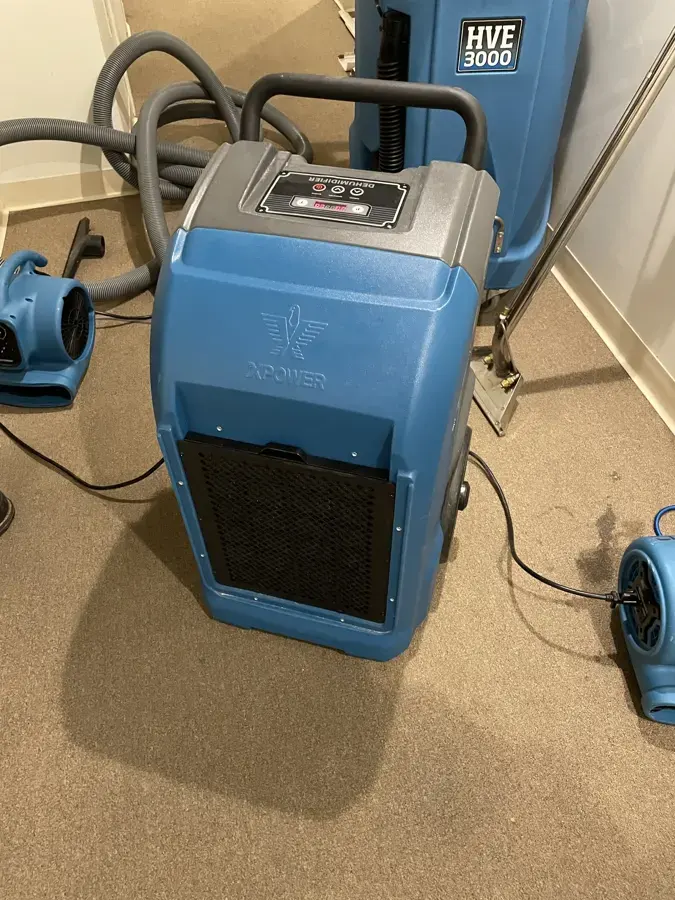
Framing and subfloor are dried to moisture readings, and air scrubbing may run during the work. The sewage backup cleanup page covers the full sequence.
After the cleanup: what to expect
Once the contaminated material is out and the surfaces are treated, the house still has to dry. Drying runs on readings, with meters checked until the framing and subfloor return to normal.
The rebuild follows the drying, not the other way around. A plumber should confirm the cause is fixed before any new flooring or drywall goes in, or the same backup can undo the work.
- Keep the plumber's written findings with the cleanup records.
- Ask for the final moisture readings in writing.
- Replace removed materials only after the readings are normal.
Insurance and paperwork
Many policies treat sewer backup as a separate coverage, so reading the wording before a loss is useful.
Written findings from the plumber, photographs and notes on what was removed all help a claim. The structural drying page explains how readings document that the work is complete.
A cleanup estimate that lists the rooms, the materials removed and the drying readings gives the insurer something concrete to work from. Gaps in the record are the most common reason a claim drags on.
- Keep the plumber's invoice and any camera inspection images.
- Save the cleanup scope and the final moisture readings.
- Note the date the backup was first noticed.
- Keep receipts for hotel stays or meals if the home was unusable.
Questions
Who maintains the sewer pipe from a Hayward house to the street?
The City of Hayward does not service lateral sewers. Under Municipal Code Section 11-3.060 the property owner maintains the building sewer.
When does the city check the public sewer main?
The city checks the public main when a plumber verifies that the main is plugged or causing the stoppage.
Why do old sewer laterals fail?
The city handbook says old laterals crack at pipe joints from age and ground shifts, leak moisture, attract tree roots and then block.
Is a sewage backup safe to clean up without help?
No. Sewage is Category 3 water and carries disease risk. Contaminated materials are removed and surfaces are treated with antimicrobial.
Does homeowners insurance cover a sewer backup?
It depends on the policy. Sewer backup is often a separate coverage, so the wording and any endorsements matter.
What should be done with belongings that touched sewage?
Porous items such as carpet, pad, cardboard and upholstery are removed and discarded. Hard items can often be cleaned and treated. Photographs before disposal help any claim.