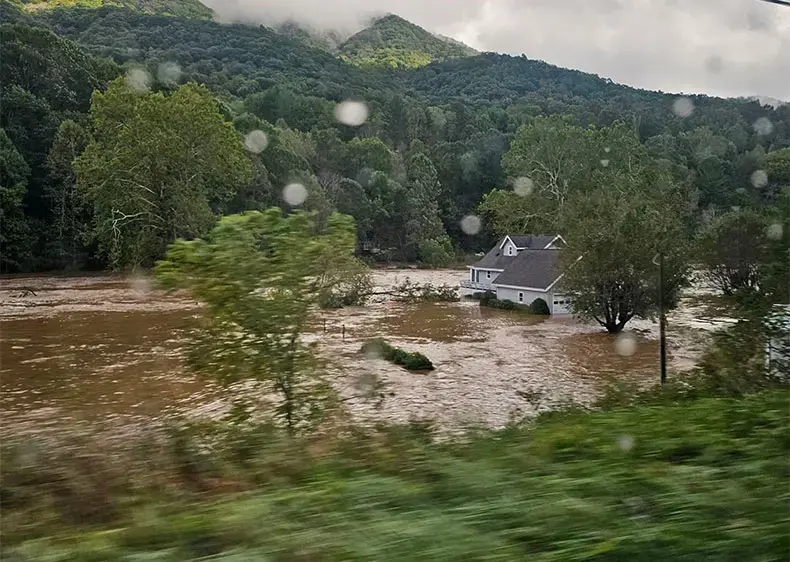
The Estudillo Canal is a flood control channel in San Leandro, and two of its aging concrete walls failed in 2021 and 2022. For owners of the homes behind them, the question is what that means when the next storm arrives.
Key takeaways
- Estudillo Canal is a flood control channel in Zone 2 of the Alameda County Flood Control and Water Conservation District.
- In October 2021 an aging concrete wall collapsed into the channel behind homes on Swenson Street, and another section failed in the New Year's Eve storm of 2022.
- A wall failure is a sign of stress on the channel, not proof that water entered any home.
- Channel and creek water is handled as Category 3 water, which means mud and wet materials are removed rather than dried in place.
- If water does reach a house, photographs and a quick call for extraction limit the damage.
What happened at the Estudillo Canal
The record is short and specific, and the San Leandro water damage pages cover how the city is served. Two sections of channel wall failed, one in October 2021 and one in the New Year's Eve storm of 2022.
October 2021
An aging concrete wall of Estudillo Canal collapsed into the channel behind homes on Swenson Street. The same month an atmospheric river brought record October rainfall to the Bay Area.
New Year's Eve 2022
Another section of canal wall failed in the New Year's Eve storm of 2022. Temporary steel struts were installed in the channel between Fargo Avenue and Interstate 880.
The tide gate plan
The Estudillo Canal tide gate rehabilitation plan replaces the gate structure with 14 new flap gates, southeast of the San Leandro Marina.
Shallow groundwater, tide and storm water meet near the bay
In the lower parts of San Leandro an upper aquifer lies 50 to 100 feet below the surface, and shallow groundwater generally flows west toward San Francisco Bay.
San Leandro Creek bounds the original San Leandro townsite on the north, and Lake Chabot Regional Park adjoins the city. Water has several routes to the bay side neighborhoods, and the canal is one of them.
- A storm, a high tide and a full channel can overlap.
- From late December 2022 to mid January 2023, about six storm systems, including atmospheric rivers, hit the Bay Area over roughly three weeks.
- Back yards beside the channel are the first place a high water level shows up.
What a channel wall failure means for neighbors
A failed wall does not mean a flooded house. It means a part of the drainage system that carries storm water away from neighborhoods is not working as designed.
For an owner behind the channel, the practical message is to treat a wet season as a time to watch, not to panic.
- Watch the water level in the channel during heavy rain.
- Know where the water would go on the lot: along a fence, through a gate or toward a low door.
- Keep sandbag supplies and a plan for moving valuables up.
- Photograph the property now so any later change is easy to document.
Why channel water is treated differently from rain
Water from a channel or creek carries soil, debris and whatever washed in upstream. That is why it is handled as Category 3 water, the same standard used in creek and flash flood cleanup.
Rain through a roof or window is cleaner. Muddy channel water soaks into wall bottoms and carpet and leaves a film behind, so drying alone is not enough.
Getting ready before the next wet season
Preparing takes little time, and it changes what happens when water arrives.
- Walk the property after a dry spell and note low spots near fences and gates.
- Keep valuables and important documents off the floor of ground level rooms.
- Keep a list of what is stored low, with photographs.
- Save the number of a restoration company before it is needed.
If water reaches the house
The first steps are simple and the order is firm.
- Stay out of rooms with standing water if electricity is live at the floor.
- Photograph the high water mark on walls and the damaged contents.
- Move small valuables and documents above the water.
- Call for creek and flood cleanup quickly, before mud dries into the flooring.
- Keep children and pets out of wet areas until cleanup is finished.
Owners, renters and landlords near the channel
At the 2010 Census, 42.5 percent of San Leandro housing units were renter occupied, so many households near the channel do not own the building they live in.
The first steps are the same for everyone, but who calls whom is different.
- Renters document the damage, move belongings to safety and notify the landlord right away.
- Landlords and owners arrange the cleanup of the structure and call the insurer.
- Renters insurance generally covers belongings, not the building.
- A shared written record of what was wet and when helps both sides.
Cleaning and drying after channel water
The work follows a set order. Skipping a step leaves contamination behind the walls.
Mud and contaminated materials out
Mud is shoveled and vacuumed out. Carpet, pad and soaked drywall at the bottom of walls are removed, because they cannot be cleaned reliably.
Cleaning and antimicrobial treatment
Hard surfaces and framing are cleaned and treated with antimicrobial. This is the step that distinguishes Category 3 work from ordinary storm cleanup.
Drying to a reading
Once the bad material is out, air movers and dehumidifiers dry the framing and subfloor to moisture readings. The storm water damage page explains how the same method applies when rain, not channel water, is the source.
Floors and wall bottoms
Flooring is lifted where needed and wall bottoms are opened to see how far the water traveled. Moisture meters set how high the removal goes.
Garages and storage
Garages and low storage rooms take mud first. Cardboard, upholstery and anything porous is usually discarded, while hard items are cleaned.

Flood maps, insurance and records
FEMA updated San Leandro local flood zones on December 21, 2018 after a coastal study. Owners can check the current flood map for their address through the FEMA Flood Map Service Center.
Standard homeowner policies and flood policies often respond differently to channel overflow, so the wording matters. Records made at the time of the loss, photographs and dated notes help any claim.
Questions
Did the Estudillo Canal wall failures flood homes?
The record shows that an aging concrete wall collapsed into the channel behind homes on Swenson Street in October 2021 and that another section failed in the New Year's Eve storm of 2022. It does not say that water entered any home.
Why is channel water called Category 3?
Channel and creek water picks up soil, debris and contaminants on the way. Category 3 means the water is treated as unsafe, so wet materials are removed and surfaces are treated.
Can carpet be saved after muddy water?
Usually not. Carpet and pad that sat in muddy water are removed because they cannot be cleaned to a safe standard.
How does an owner find out whether a home is in a flood zone?
FEMA updated San Leandro flood zones in December 2018, and the FEMA Flood Map Service Center shows the current map for an address.
What should be photographed after a flood?
The high water mark on walls, standing water, damaged furniture and flooring, and any visible mud. Date stamps help.
What is the tide gate work at the Estudillo Canal?
The Estudillo Canal tide gate rehabilitation plan replaces the gate structure with 14 new flap gates, southeast of the San Leandro Marina. It is part of keeping the channel working.
Who handles cleanup in a rental near the channel?
The landlord arranges cleanup of the building. A tenant documents the damage, moves belongings and tells the landlord at once. Renters insurance usually covers the tenant's belongings.