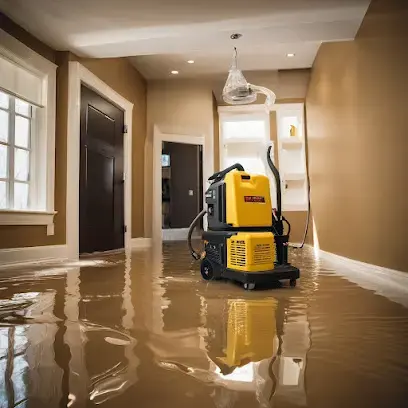
Alameda sits on an island archipelago in San Francisco Bay, and its highest point is only about 39 feet above sea level. A basement there can take on water without a pipe breaking and without rain falling that day.
Key takeaways
- Some main island houses have below grade basements that commonly take on water for a period each year in heavy rain.
- Groundwater is shallow in Alameda, and rising sea levels raise it further, so water can come up through a floor rather than down from the sky.
- A sump pump and French drain help, but a long storm, a high tide or a power failure can overwhelm them.
- Extraction starts by finding the source, because tide, rain, groundwater and a main break each call for a different next step.
- Wet framing and basement walls are dried to moisture readings before anything is rebuilt.
Why basements on the island take on water
The island is relatively flat, and Alameda Point, Bay Farm Island and South Shore are largely built on bay fill. Fill and a nearby bay mean the water table sits close to the surface.
A UC Santa Cruz coastal researcher said about 60 percent of Alameda groundwater is already close to the surface, and the city Health and Safety Element says rising sea levels cause rising groundwater.
- Many older Victorian, Craftsman, Tudor and bungalow homes in the Gold Coast, Fernside and East End areas are on the main island.
- Some of those houses have below grade basements that commonly take on water for a period each year.
- Many owners have installed French drains and sump pumps in response.
Three ways water arrives: rain, tide and groundwater
The city says Alameda flood risk is predominately from high tides, which storm surge and heavy rain can make worse. Each source behaves differently in a basement.
Rain and storm runoff
Alameda gets about 22 inches of rain a year. In October 2021 an atmospheric river brought record October rainfall to the Bay Area, and Harbor Bay Parkway on Bay Farm Island closed because of severe flooding.
In January 2023 a run of storms led the City of Alameda to proclaim a state of emergency, sandbags were handed out at Alameda Point, and flooded basements were reported.
High tides and king tides
In January 2026 abnormally high king tides pushed water out of a storm drain. A tide that high can slow drainage and raise the water table under nearby homes.
Water coming up through the floor
Water that seeps up along the wall and floor joint, or through a floor crack, is groundwater. It often arrives slowly, after days of wet weather.
When the water comes from the street
Not every wet basement starts with weather. On August 24, 2025, an 85 year old 12 inch EBMUD water main broke near Webster Street and Buena Vista Avenue, causing flooding and sinkholes and closing Webster Street.
East Bay Municipal Utility District supplies drinking water in Alameda, so a break in a main is a reminder that old infrastructure can fail on a clear day.
- A basement that floods with no rain and no high tide may have a utility or plumbing source.
- Muddy or cloudy water can point to a break in the ground nearby.
- The water meter and the street are worth checking before assuming a storm cause.
- A utility main break outside is a different problem from a failed pipe inside, and the response differs.
When the sump pump cannot keep up
A sump pump moves water out of the basement, but it depends on power and on a discharge path that is not itself full.
During a big storm, those two things are exactly what can fail.
- A power outage stops the pump while the water keeps rising.
- A discharge hose that empties near the foundation sends the water straight back.
- A pump that runs constantly may be losing the contest and needs a second look.
- A float switch stuck against the pit wall leaves the pump silent in a flooded pit.
What extraction and drying involve
Extraction starts by finding the source. Stormwater in Alameda runs through a separate community owned system, not the sanitary sewer, so a drain backup in a basement is a different problem from a storm.
Removing the water
Pumps and extractors remove standing water, the same water extraction and removal used for any wet floor. The source is noted, because groundwater, tide water and sewage are not treated alike.
Drying the structure
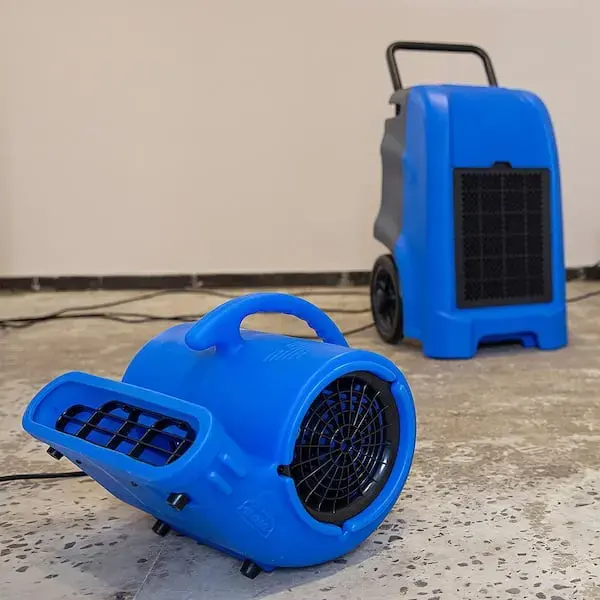
Wall bottoms, baseboards and framing are measured with moisture meters. Air movers and dehumidifiers run until readings return to normal.
The structural drying page covers how finishing materials are decided.
What an owner can do right away
Small steps early keep a bad night from becoming a bad month.
- Stay out of a basement with standing water if power is on at the floor.
- Photograph the water level and the damaged items before moving anything.
- Lift stored boxes and electronics off the floor.
- Check where the sump discharge empties.
- Call for water extraction before wet drywall and carpet start to break down.
Storms, tides and what comes next
The city is preparing a shoreline sea level rise adaptation plan due by early 2028. Until then, basement owners are mostly dealing with the same pattern: storms, tides and shallow groundwater arriving together.
A basement that took on water once is more likely to do it again, so repairs are best paired with a plan for the next storm. The storm water damage page explains how the work is sequenced after a major rain event.
- Test the sump pump before the wet season starts.
- Consider a battery backup so the pump runs through an outage.
- Keep gutters and downspouts discharging away from the house.
Records, insurance and repairs after a wet basement
A basement loss is often a long conversation, because water arrives slowly and leaves slowly. Notes help.
Policies may treat groundwater, storm runoff, tide water and a sudden pipe break differently, so asking the insurer which one applies is the first step.
- Date photographs of the water level, the walls and the damaged contents.
- Keep receipts for any pump, fan or temporary repair.
- Ask the crew for moisture readings on the day the drying ends.
- Keep a note of which source seemed to be responsible.
Questions
Why does an Alameda basement take on water without a broken pipe?
The island is flat and partly built on bay fill, so groundwater sits close to the surface. Heavy rain, high tides and rising sea levels all push the water table up and can bring water through a basement floor.
What is a king tide?
A king tide is an abnormally high tide. In January 2026 king tides in Alameda pushed water out of a storm drain. A basement can feel the effect through slow drainage and a higher water table.
Is groundwater in a basement the same as sewage?
No. Groundwater and storm water move through a separate system from the sanitary sewer in Alameda. A basement backup from a floor drain is a different problem and is handled as Category 3 water.
Will a sump pump stop basement flooding?
A sump pump reduces water but cannot stop all of it. A power outage, a blocked discharge or a long storm can overwhelm the pump.
Does insurance cover basement water in Alameda?
It depends on the policy and the source. Policies often treat groundwater and storm runoff differently from a sudden pipe failure, so the wording matters.
Can a basement flood when it has not rained?
Yes. High tides, a high water table and a utility main break can all put water in a basement on a dry day. Finding the source is the first job.