Alameda Structural Drying and Dehumidification
Bay-side humidity and a shallow water table make drying in Alameda slow to judge by feel, so crews place air movers and dehumidifiers and let daily moisture readings say when the structure is dry.
(888) 774-9605Call about drying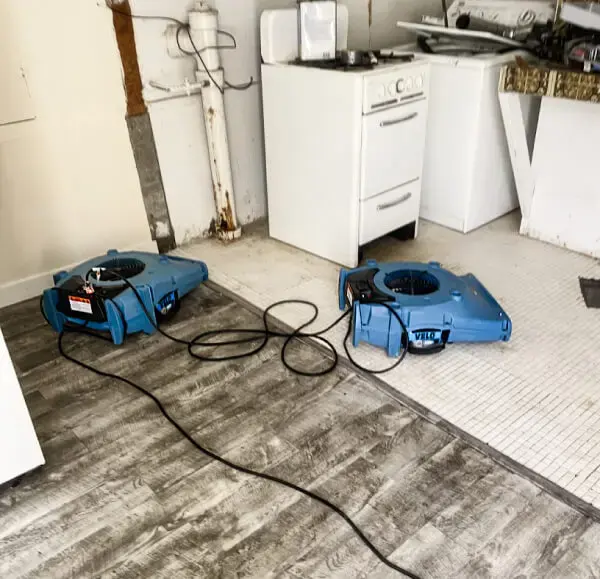 24/7 · Alameda
Structural Drying and Dehumidification at a glance in Alameda
First steps for structural drying and dehumidification in Alameda
- 1
Keep doors shut
Closed doors and windows let dehumidifiers work on the wet space.
- 2
Leave it running
Equipment is loud, but turning it off stops the drying.
- 3
Do not move it
Place nothing on the units and let the crew move them.
- 4
Report changes
Tell the crew about new stains or damp spots between visits.
Water that has been extracted still leaves moisture in studs, subfloor, cabinet bases and concrete. Alameda adds its own challenges, with humid air off the bay, groundwater close to the surface and basement floors that take on water each rainy season, so a floor that feels dry can still read wet.
What the equipment does
- Air movers sweep dry air over wet surfaces and into wall cavities
- LGR dehumidifiers strip water from the air so it can absorb more
- Drying mats lift moisture out of hardwood without tear-out
- Desiccant units take on dense or stubbornly damp materials
- Thermal cameras reveal wet spots the eye cannot find
What does structural drying and dehumidification cost in Alameda, CA?
One or two rooms with air movers and LGR dehumidifiers cost the least. Several rooms or hardwood need mats and more zones, and large or dense losses with desiccant units reach the highest band.
One or two rooms
$1,500 to $4,000
- Air movers and LGR
- Daily readings
- Three to five days
Several rooms or hardwood
$4,000 to $10,000
- Floor drying mats
- Multiple drying zones
- Crawl space equipment
Large or dense losses
$10,000 to $25,000
- Desiccant dehumidifiers
- Slab or whole-floor drying
- Extended monitoring
Ranges are typical, not a quote: category of water, square footage, material class and how fast drying started move the number most. Run the water damage cost calculator for a closer range.
The structural drying and dehumidification process in Alameda, step by step
- 1
Map the moisture
Use meters and thermal imaging to find each wet material.
- 2
Position the equipment
Match air movers and dehumidifiers to the wet zones.
- 3
Check every visit
Read each material and relocate the gear as areas dry.
- 4
Close the job
Record final readings and pick up equipment once targets are met.
Why readings decide the finish
No calendar date ends a drying job. A meter measures the moisture in each material against a dry reference, and the machines remain until the two numbers agree. Each visit's readings are written down, and the log becomes part of the claim file for the adjuster.
How the setup is planned
The crew sizes the equipment to the room and the number of wet materials, then moves it as zones dry. Doors and windows are kept closed so the dehumidifiers work on the wet space, and crawl spaces get their own equipment. After an extraction job, water extraction hands off to this stage, and a long leak may need the methods used for slab leak water damage.
- Moisture map before any equipment is placed
- Daily checks and equipment moves
- Final readings to close out the job
When drying is not enough
Materials that stayed wet too long may need to come out instead of being dried. If readings stall, the crew explains why and removes the part that will not dry, so the rest of the structure can reach target.
Structural drying and dehumidification across Alameda and nearby towns
Drying crews serve ZIP codes 94501 and 94502 across Alameda Island and Bay Farm Island, including the Gold Coast, Northside, Fernside, East End, West End, South Shore, Alameda Point, Harbor Bay and Marina Village.
The same service nearby: structural drying and dehumidification in Castro Valley, Oakland, San Leandro.
Related water damage services in Alameda
How long does drying last?
That depends on the materials and the time they sat wet, so the readings, not a calendar, decide when it ends.
Why does the equipment run so loudly?
Air movers and dehumidifiers work at high speed to draw moisture from dense framing, and they must run without stopping.
Should windows stay open?
Not while drying is under way. Humid bay air coming in fights the dehumidifiers and prolongs the job.
Does drying prevent mold?
Fast drying inside the 24 to 48 hour window limits the conditions mold needs, and readings show when materials are dry.
Can hardwood stay in place?
Often yes with drying mats if the water was removed quickly, though badly cupped boards may still need replacing.
Does the power bill rise?
Yes, because the machines draw electricity. It is a normal part of the claim, so keep your records.
Surface looks dry?
A crew will map the moisture, place the dehumidifiers and check readings each visit until the structure is dry.
Castro Valley Water Damage Restoration · Castro Valley, CA