Appliance Leak Water Damage in Fremont
A dishwasher, washer or supply hose can leak for days behind a cabinet or a closet door. Fremont crews dry the floor, the cabinet base and the subfloor, including shared walls in multi-unit buildings.
(888) 774-9605Request appliance leak help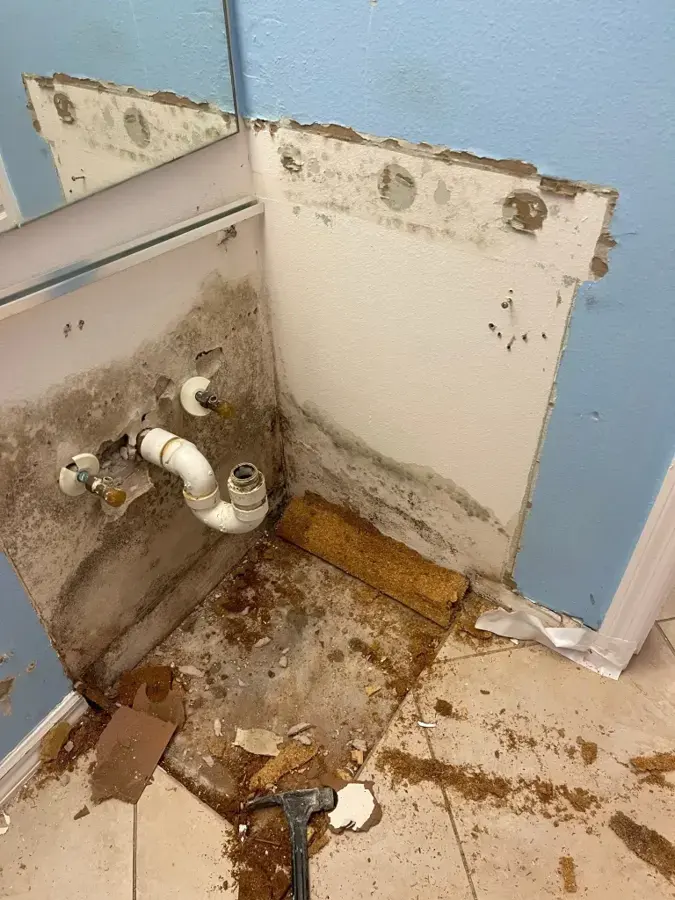 24/7 · Fremont
Appliance and Supply Line Leaks at a glance in Fremont
First steps for appliance and supply line leaks in Fremont
- 1
Close the valve
Shut the small valve behind the appliance, or the main if it will not turn.
- 2
Unplug it
Unplug the appliance and pull it out only on a dry floor.
- 3
Photograph the leak
Take pictures of the hose, the wet floor and any cabinet staining.
- 4
Call for drying
Say how long it may have leaked and whether neighbors share the wall.
Appliance leaks are slow and sneaky. A cracked hose or a loose drain connection drips behind a cabinet, and the damage shows only when a floor softens or a neighbor knocks. In 2010 about 37.4 percent of Fremont's occupied homes were renter-occupied, so one leak often involves a shared wall or another unit.
Common leak sources
- Dishwasher supply hoses and drain connections
- Washing machine hoses and overflow
- Refrigerator ice maker connections
- Sink traps and shutoff valves under cabinets
- Water heaters and softeners in closets
What does appliance and supply line leaks cost in Fremont, CA?
Appliance leak cleanup in Fremont typically costs about $900 to $16,000. A leak caught early in one room sits at the low end, and a long-running leak under cabinets and floors costs the most.
Caught early, one room
$900 to $3,000
- Extraction
- Toe kick removal
- In-place drying
Kitchen or laundry
$3,000 to $8,000
- Cabinet base drying
- Flooring removal
- Subfloor checks
Long-running leak
$7,000 to $16,000
- Cabinet and floor removal
- Crawl space drying
- Extended monitoring
Ranges are typical, not a quote: category of water, square footage, material class and how fast drying started move the number most. Run the water damage cost calculator for a closer range.
The appliance and supply line leaks process in Fremont, step by step
- 1
Find the water path
Meters follow moisture from the appliance outward.
- 2
Open the base
Toe kicks and wet flooring come off.
- 3
Dry the layers
Air movers and a dehumidifier work on the base and subfloor.
- 4
Check neighbors
Shared walls are read before closing out.
Behind the cabinet
Cabinet bases and toe kicks hold moisture where nobody sees it. Crews pull toe kicks, probe the base and lift flooring edges to find where water traveled, and the subfloor is read before anything is closed back up. Refrigerator and sink areas get the same check.
Shared walls and multi-unit buildings
When a leak reaches a shared wall, neighboring units are checked with meters and the work is mapped unit by unit. Records are kept so owners, tenants and insurers each see their own part.
- Neighbor walls and ceilings read
- Water path photographed
- Each unit logged separately
Drying and records
Air movers and dehumidifiers dry the cabinet base and floor until readings return to normal. Photos of the appliance, hose and wet area go into the file. A failed supply pipe is covered under burst pipe cleanup, and wider details sit on the main appliance leak page.
Appliance and supply line leaks across Fremont and nearby towns
Appliance leak calls come from houses and apartments in Fremont, including Centerville, Irvington, Niles, Warm Springs and North Fremont, across ZIP codes 94536, 94537, 94538 and 94539, wherever a hose or drain gives way.
The same service nearby: appliance and supply line leaks in Castro Valley, Hayward, San Leandro.
Related water damage services in Fremont
How long can an appliance leak go unnoticed?
Days or weeks if it sits behind a cabinet or a washer. That is why meters check floors and wall bottoms, not just the visible stain.
Does the cabinet have to be removed?
Often only the toe kick and part of the base. Meters show whether the cabinet box can dry in place or needs replacement.
What if a neighbor's unit is affected?
The work is mapped unit by unit, with records for each owner or tenant. Shared walls are read and dried as part of the same plan.
Is appliance water clean?
Dishwasher and washer water is used water with soap and some contamination, so soaked porous materials are often removed rather than saved.
Will the insurer cover a slow leak?
Policies differ on sudden versus long-term leaks, so photos, dates and readings help the adjuster decide what happened and when.
Dry out after an appliance leak
Tell the crew which appliance leaked and which rooms or units are wet, and they will map the water and dry the layers.
Castro Valley Water Damage Restoration · Castro Valley, CA