Structural Drying in Fremont
Water that soaks framing, subfloor and walls does not leave on its own. Fremont crews place air movers and dehumidifiers by the moisture map and check the readings daily until the structure is dry.
(888) 774-9605Request structural drying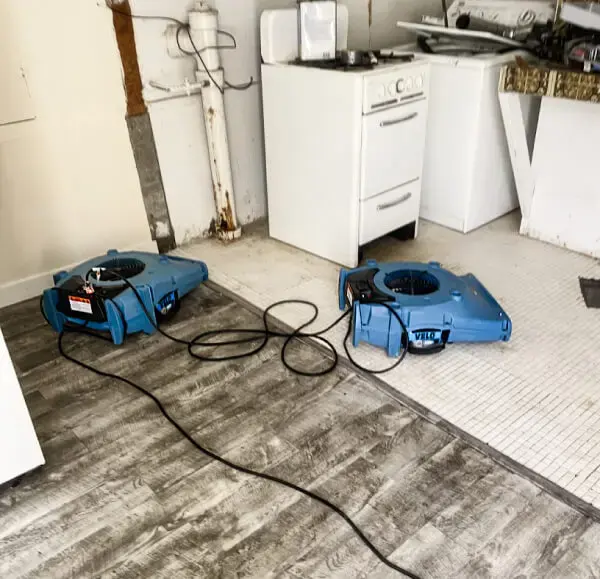 24/7 · Fremont
Structural Drying and Dehumidification at a glance in Fremont
First steps for structural drying and dehumidification in Fremont
- 1
Leave it running
Keep air movers and dehumidifiers on between visits.
- 2
Close the room
Keep doors and windows shut in the drying area.
- 3
Let readings continue
Surfaces can feel dry while framing is still wet.
- 4
Report anything new
Mention new stains or smells so the crew can recheck.
Drying is where a water loss is won or lost. Surface water can be gone in a day while framing, subfloor and wall cavities stay wet for much longer, so equipment is placed by the moisture map and stays until readings agree. See water extraction for what comes before drying.
What gets dried
- Wall framing and bottom plates
- Subfloor and joists under wet rooms
- Hardwood boards with floor drying mats
- Concrete slabs with desiccant dehumidifiers
- Cabinet bases and wall cavities
What does structural drying and dehumidification cost in Fremont, CA?
Structural drying in Fremont commonly costs about $1,500 to $25,000. One or two rooms with a few days of equipment sit at the low end, and large or dense losses with desiccant units cost the most.
Single room or two
$1,500 to $4,000
- Air movers and LGR dehumidifier
- Daily moisture readings
- Three to five days of drying
Multiple rooms or wood floors
$4,000 to $10,000
- Mats on hardwood boards
- Several drying zones
- Equipment in the crawl space
Large or dense materials
$10,000 to $25,000
- Desiccant units
- Slab or full-floor drying
- Longer monitoring
Ranges are typical, not a quote: category of water, square footage, material class and how fast drying started move the number most. Run the water damage cost calculator for a closer range.
The structural drying and dehumidification process in Fremont, step by step
- 1
Map the moisture
Meters and thermal imaging mark wet materials.
- 2
Set the equipment
Air movers and dehumidifiers go where the map points.
- 3
Read every day
Moisture numbers are logged and compared with dry goals.
- 4
Remove the gear
Equipment leaves only after every material passes.
How the equipment works
Air movers push dry air across wet surfaces, and low grain refrigerant dehumidifiers pull the moisture out of the air. Dense materials and slabs may call for desiccant units, which keep drying when the air is cool.
Daily readings
Each visit, meters read the same spots as the day before, and the numbers go in the log. Equipment is moved as areas dry, and removed only when every material reaches its goal. Readings are shared with the owner on request.
- Same points read every visit
- Equipment moved as zones dry
- Final readings against dry references
Wet winters, dry summers
Fremont has a warm-summer climate with about 17 inches of rain a year, so most losses follow a wet winter and sit in dry summer air. The dry weather helps, but it does not replace meters. A loss in July is dried to the same goals as one in January. Wider pricing details are on the main structural drying page.
Structural drying and dehumidification across Fremont and nearby towns
Drying equipment serves Fremont properties in Niles, Centerville, Irvington, Mission San Jose, Warm Springs and North Fremont, across ZIP codes 94536, 94537, 94538 and 94539, in houses, apartments and commercial buildings.
The same service nearby: structural drying and dehumidification in Castro Valley, Hayward, San Leandro.
Related water damage services in Fremont
How long does structural drying take?
Three to five days is common for one or two rooms. Hardwood, slab and dense framing run longer, and the daily readings decide the finish.
Why is the equipment loud and warm?
Dehumidifiers and air movers run continuously and give off heat. That is a sign they are working, and it passes once the equipment is removed.
Can wet walls dry without opening them?
Often yes, with small openings or baseboard removal to push air into the cavity. Meters show whether more opening is needed.
Does summer weather speed up drying?
Warm dry air can help, but the equipment still runs on the moisture map. Fremont's dry summers do not change the goals.
How is the end of drying decided?
When meter readings on framing, subfloor and walls match dry reference points set for that material, and the log shows steady numbers.
Dry the structure behind the surface
Share what got wet and when, and the crew will map the moisture, place the equipment and read the numbers each day.
Castro Valley Water Damage Restoration · Castro Valley, CA