Commercial Water Damage in Oakland
Shops, offices, clinics and apartment buildings cannot stay closed for long. Crews extract, contain and dry in phases, map each unit and keep tenant records so the business can reopen sooner.
(888) 774-9605Call about a building loss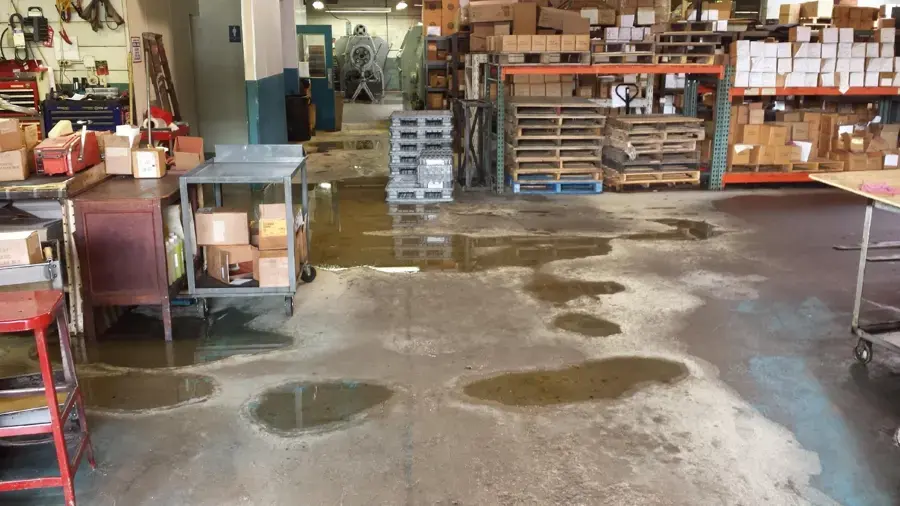 24/7 · Oakland
Commercial Water Damage at a glance in Oakland
First steps for commercial water damage in Oakland
- 1
Stop the source
Shut the valve or riser that is feeding the loss and cut power to wet areas.
- 2
Call the manager
Alert the property manager and the building's insurer about the loss.
- 3
Move inventory
Lift stock, files and electronics out of the wet area where it is safe.
- 4
Photograph units
Document each affected unit and tenant before cleanup starts.
A commercial loss is about downtime as much as water. Oakland's buildings include hospitals, schools, apartment buildings and retail corridors such as International Boulevard, the Dimond District and the Montclair Business District, plus port area buildings.
What a building loss needs
- Containment so open units keep operating
- Unit by unit moisture maps
- Phased drying that works around business hours
- Tenant and landlord documentation
- Equipment sized to the volume of the space
What does commercial water damage cost in Oakland, CA?
Commercial jobs run from about $3,000 for one suite or shop to $150,000 for a large building loss, with the number of units, the equipment needed and the after hours schedule driving the cost.
One suite or shop
$3,000 to $10,000
- Extraction
- Containment
- After hours drying
Several units or floors
$10,000 to $40,000
- Unit by unit mapping
- Phased drying
- Tenant documentation
Large building loss
$40,000 to $150,000
- Sprinkler or roof failures
- Large equipment sets
- Project management
Ranges are typical, not a quote: category of water, square footage, material class and how fast drying started move the number most. Run the water damage cost calculator for a closer range.
The commercial water damage process in Oakland, step by step
- 1
Assess the building
Meters map each unit and the shared systems that carried the water.
- 2
Contain and extract
Barriers protect dry areas while water is removed.
- 3
Dry in phases
Units are dried on a schedule that suits the occupants.
- 4
Document by tenant
Each unit gets its own photos and readings.
Common commercial causes
Sprinkler failures, roof drainage that backs up, restroom supply leaks and sewage from shared drains cause most building losses. A water main break, like the one that closed streets near Alta Bates Hospital on August 8, 2025, can also send water toward street level units.
Working around occupants
Phased drying lets part of a building keep operating while another part is open. Work can run after hours, and each tenant gets its own moisture logs and photos, which helps with property and business interruption claims. Reopening dates depend on readings, so each unit is released only when it tests dry.
Larger and smaller jobs
One suite or shop follows the same steps as a home, as in water extraction, only with commercial equipment. Larger buildings need project management, which is where structural drying planning and desiccant equipment come in.
Commercial water damage across Oakland and nearby towns
Commercial work covers Oakland buildings along International Boulevard, in the Dimond District and the Montclair Business District, and around the Port of Oakland, across ZIP codes 94606, 94607 and 94621.
The same service nearby: commercial water damage in Castro Valley, Alameda, San Leandro.
Related water damage services in Oakland
What should a property manager do first after a leak?
Stop the source, protect tenants and equipment, notify the insurer and call a restoration crew to contain and extract.
Can a business stay open during drying?
Often yes. Containment and phased drying keep dry areas operating, and work can run after hours when equipment noise is a problem.
Who documents a loss in a multi tenant building?
The crew records each unit separately, with photos, moisture logs and equipment records for the landlord, the tenants and each insurer.
Is a sprinkler discharge treated differently?
Sprinkler water is usually clean water at first, but it spreads through ceilings and floors, so the work is mapped unit by unit.
Does the size of the equipment matter?
Yes. Large buildings need desiccant dehumidifiers and high capacity air movers sized to the volume of air, which is planned before equipment goes in.
What if sewage backs up in a shared drain?
That is a black water loss, so the affected units are contained and cleaned under sewage backup cleanup rules.
Get the building drying
Describe the property, the units wet and the source, and the crew will phase the work around occupants.
Castro Valley Water Damage Restoration · Castro Valley, CA