Structural Drying in Oakland, CA
After the standing water is gone, the structure still holds moisture. Crews set up air movers and LGR dehumidifiers, log moisture readings on each visit and keep the gear running until framing, subfloor and walls test dry.
(888) 774-9605Call about drying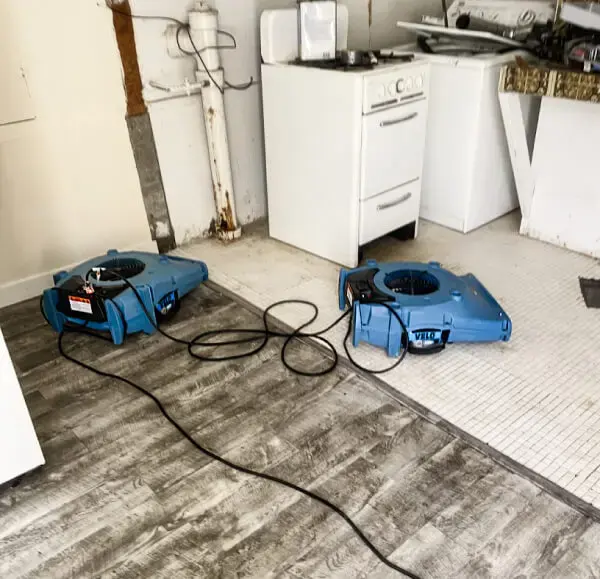 24/7 · Oakland
Structural Drying and Dehumidification at a glance in Oakland
First steps for structural drying and dehumidification in Oakland
- 1
Leave it running
Do not switch equipment off.
- 2
Keep doors shut
Closed rooms hold the drying air and make the dehumidifiers work better.
- 3
Empty the tanks
Follow the crew's instructions on any dehumidifier that has a bucket.
- 4
Report changes
Tell the crew about new stains, smells or damp spots between visits.
Nobody can tell by touch when a structure is dry, so every material gets a meter reading. Equipment is placed to move air and strip humidity, and each visit shows whether the numbers are falling.
Hillside homes and runoff
Hillside homes can be soaked by rainy season runoff. In February 2024, Trestle Glen residents reported that an underground hillside drainage system was failing, with a garage flooding even in summer and a patio buckling. Water that keeps returning needs a drainage fix as well as drying.
What does structural drying and dehumidification cost in Oakland, CA?
Structural drying alone runs from about $1,500 for one or two rooms to $25,000 for large or dense losses, depending on how many rooms, the materials and whether hardwood or slab drying is needed.
One or two rooms
$1,500 to $4,000
- Air movers and LGR
- Daily readings
- Equipment logged
Several rooms or hardwood
$4,000 to $10,000
- Floor drying mats
- Multiple drying zones
- Crawl space equipment
Large or dense losses
$10,000 to $25,000
- Desiccant dehumidifiers
- Slab or whole floor drying
- Extended monitoring
Ranges are typical, not a quote: category of water, square footage, material class and how fast drying started move the number most. Run the water damage cost calculator for a closer range.
The structural drying and dehumidification process in Oakland, step by step
- 1
Take baselines
Meters and a thermal camera record where each material starts.
- 2
Size the setup
Fans and dehumidifiers are matched to the room volume.
- 3
Log and adjust
Each visit adds readings and the setup is changed to suit.
- 4
Release the gear
Equipment leaves only after every material tests dry.
The equipment
- Air movers keep dry air sweeping over wet surfaces
- LGR dehumidifiers wring water vapor out of the room air
- Drying mats draw water up out of hardwood boards
- Desiccant units handle dense or cold areas
- Hoses and ports dry wall cavities and crawl spaces
Why readings decide the end
The date on a calendar says nothing about moisture. Each reading is compared with an unaffected reference spot, and the gear stays until wall, floor and framing all match it. That is why equipment may stay after a room feels dry to the touch.
- Moisture content of wood framing and subfloor
- Humidity and temperature in each room
- Photos of the readings at each visit
- Temperature and humidity sensors track the air in each room
Where drying fits
Drying follows water extraction on most jobs, and it is the longest part of a flood or pipe loss. Large or dense losses may call for desiccant dehumidifiers, which is also why commercial water damage projects use bigger equipment sets.
Structural drying and dehumidification across Oakland and nearby towns
Drying crews serve Oakland hill and flatland neighborhoods such as Trestle Glen, Montclair, Millsmont and Maxwell Park, across ZIP codes 94601, 94606 and 94618, from small rooms to whole floors.
The same service nearby: structural drying and dehumidification in Castro Valley, Alameda, San Leandro.
Related water damage services in Oakland
How long does structural drying take?
There is no fixed number. It depends on the materials, the water load and the humidity, and readings on each visit show when every material is dry.
Why is the drying equipment so loud?
Powerful machines are needed to move air and pull humidity from dense materials, and they run until the readings say the job is done.
Can I turn the equipment off at night?
It is best not to, because stopping the drying lets moisture settle back into the materials and extends the job.
Will the electric bill rise?
Dehumidifiers and air movers draw power, so the bill goes up for the drying period.
Does hardwood need special drying?
Yes. Hardwood floors are dried with mats that pull moisture through the boards, and the crew tracks cupping before deciding whether to replace them.
Can drying stop a hillside leak?
No. Drying removes moisture already in the structure, and a recurring source such as failing hillside drainage has to be fixed separately. See storm water damage.
Dry the structure fully
Tell the crew which rooms were wet and how long the water sat, and the drying plan is sized to match.
Castro Valley Water Damage Restoration · Castro Valley, CA