Alameda Slab Leak Water Damage Cleanup
When a pipe leaks under a concrete slab in an Alameda home, water can rise into flooring and walls unseen, so crews use thermal imaging to read the slab, remove wet finishes and dry the floor system.
(888) 774-9605Call about a slab leak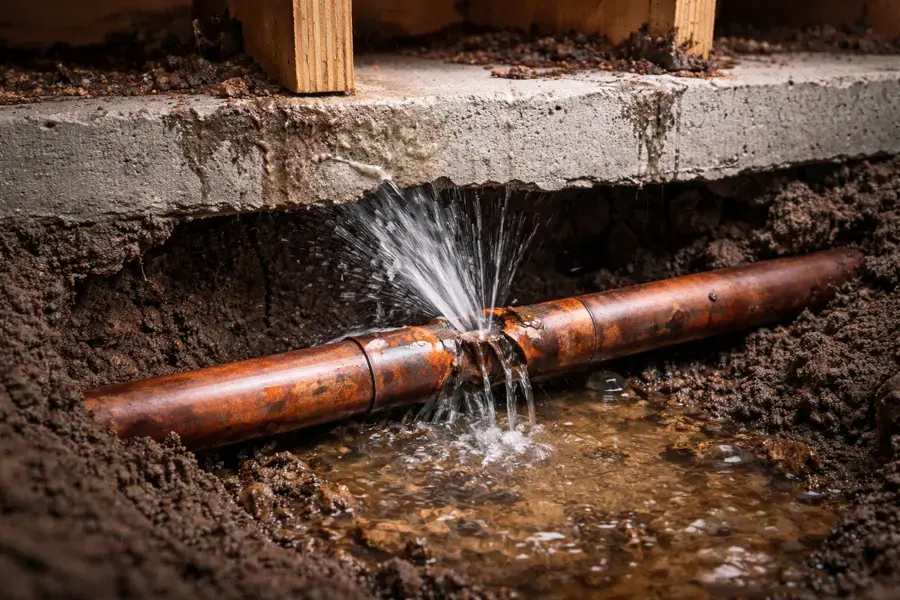 24/7 · Alameda
Slab Leak Water Damage at a glance in Alameda
First steps for slab leak water damage in Alameda
- 1
Shut off the water
Close the main valve and check whether the meter keeps moving.
- 2
Feel the floors
Note warm spots and soft or damp areas for the leak detection visit.
- 3
Call for a leak finder
The pipe has to be located and fixed before the drying work is complete.
- 4
Take photos first
Capture damp floors and baseboards before flooring is removed.
This is general guidance for houses built on a concrete slab, since no local share of slab homes in Alameda is claimed. A leak in a pipe under the slab pushes water up through cracks and joints, and it can run for a long time before warm spots, damp carpet or a rising water bill give it away.
Signs a slab is leaking
- A floor that feels warm underfoot in one patch
- Carpet or laminate that lifts at the seams
- A utility bill that climbs with no change in habits
- Hissing or running sounds with every tap closed
- Baseboards that swell or stain along one wall
What does slab leak water damage cost in Alameda, CA?
A small area of tile or vinyl costs the least because little flooring comes out. Carpet or laminate rooms add removal and drying, and a long-running leak across several rooms reaches the highest band.
Small area, tile or vinyl
$1,500 to $4,500
- Thermal mapping
- Baseboard removal
- Slab drying
Carpet or laminate rooms
$4,500 to $11,000
- Pad and laminate removal
- Wall bottom drying
- Cabinet toe kicks
Long-running, several rooms
$10,000 to $25,000
- Flooring removal across rooms
- Desiccant drying
- Extended monitoring
Ranges are typical, not a quote: category of water, square footage, material class and how fast drying started move the number most. Run the water damage cost calculator for a closer range.
The slab leak water damage process in Alameda, step by step
- 1
Read the slab
Use thermal imaging and meters to mark every wet zone.
- 2
Remove wet finishes
Take out pad, laminate and baseboards in the wet zones.
- 3
Dry the slab
Run air movers and dehumidifiers over the concrete and walls.
- 4
Run and record
Log readings each visit until the slab reaches dry targets.
Finding the wet area
A thermal camera shows temperature differences across the floor, and a moisture meter confirms where water is present. A leak detection plumber pinpoints the pipe and repairs or reroutes it. The restoration crew then works from the same map, so flooring is removed only where it is wet.
Drying a slab and the rooms above it
Concrete holds moisture for a long time, so drying takes steady airflow and dehumidification. Wet pad, laminate and baseboard come out, and air movers and dehumidifiers run over the slab and along wall bottoms. In dense or large losses, desiccant units pull moisture out faster, and the same methods apply as for structural drying.
- Thermal mapping before removal
- Slab and wall bottom drying
- Desiccant units for heavy losses
What gets recorded
Each visit includes slab readings, wall readings and room humidity. The numbers show the adjuster when drying is finished, and photos of the removed flooring support the scope. If the pipe also wet cabinets or a burst pipe area nearby, those readings are logged too.
Slab leak water damage across Alameda and nearby towns
Slab leak crews serve ZIP codes 94501 and 94502 across Alameda Island and Bay Farm Island, including Harbor Bay, Alameda Point, South Shore, Northside, East End and West End.
The same service nearby: slab leak water damage in Castro Valley, Oakland, San Leandro.
Related water damage services in Alameda
What is a slab leak?
A pipe under or inside the concrete floor has failed, and the water works its way up into whatever flooring sits above the slab.
How is a slab leak found?
Thermal imaging, a moisture meter and acoustic listening by a plumber pinpoint the spot without breaking the whole floor.
Can a slab be dried in place?
Yes. Concrete can be dried with air movers and dehumidifiers, and readings show when it has reached dry targets.
How long does slab drying take?
Dense concrete dries slowly, so the readings decide the timing instead of a set number of days.
Will flooring have to be replaced?
Wet carpet pad, laminate and some wood floors usually do, while tile can often stay if the area beneath is dried.
Does insurance cover a slab leak?
Coverage varies by policy and cause. Thermal images, readings and photos give the adjuster a clear record to work from.
Warm spot on the floor?
A crew will map the slab, remove wet finishes only and dry the concrete, recording readings for the claim.
Castro Valley Water Damage Restoration · Castro Valley, CA