Slab Leak Water Damage in Oakland
When a pipe leaks beneath a concrete floor, water rises into flooring, baseboards and wall bottoms. Crews map the wet area with a thermal camera, remove what is soaked and dry the slab itself.
(888) 774-9605Call about a slab leak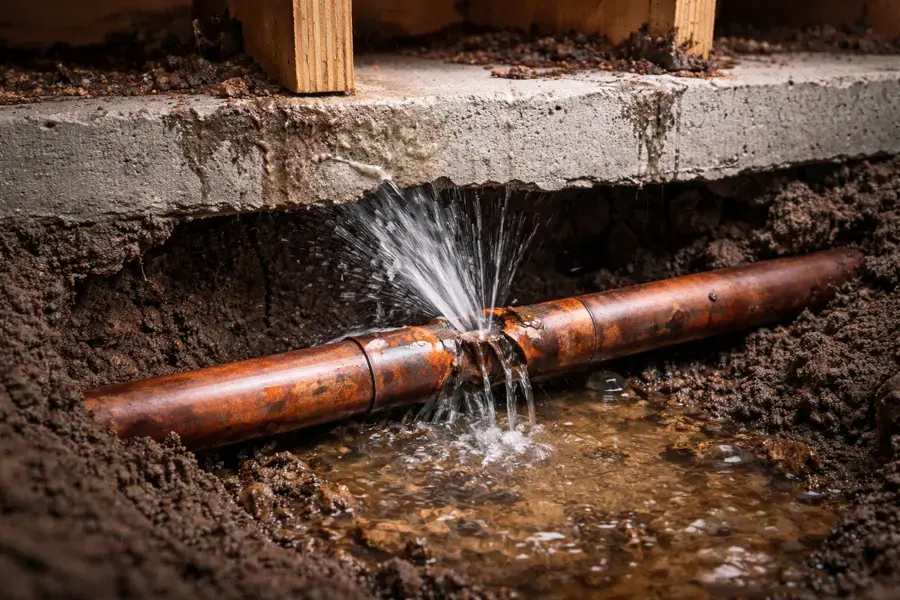 24/7 · Oakland
Slab Leak Water Damage at a glance in Oakland
First steps for slab leak water damage in Oakland
- 1
Listen and look
Check for running water sounds, warm floor spots and damp carpet with fixtures off.
- 2
Check the meter
If the meter moves with every fixture off, the leak is hidden somewhere.
- 3
Protect the room
Move furniture and rugs off the damp floor and keep shoes off wet carpet.
- 4
Record the meter
Photograph the damp area, baseboards and meter reading before repairs begin.
A slab leak is a pipe failure under or inside a concrete floor. Not every home has one, so the crew first confirms how the floor is built and where the moisture is coming from, using readings instead of assumptions about the neighborhood.
Signs water is rising through the floor
- A warm spot on the floor
- Carpet or laminate that stays damp
- Baseboards that stain or curl
- The sound of running water when fixtures are off
- A water bill that jumps for no reason
- Flooring that lifts or cracks at the seams
What does slab leak water damage cost in Oakland, CA?
Slab leak cleanup commonly runs from about $1,500 for a small tile or vinyl area to $25,000 when several rooms and desiccant drying are involved, and the plumbing repair is billed by the plumber separately.
Small tile or vinyl area
$1,500 to $4,500
- Thermal mapping
- Baseboard removal
- Slab moisture checks
Carpet or laminate rooms
$4,500 to $11,000
- Pad and laminate removal
- Wall bottom drying
- Toe kick access
Several rooms, long running
$10,000 to $25,000
- Flooring removal in many rooms
- Desiccant drying
- Extended monitoring
Ranges are typical, not a quote: category of water, square footage, material class and how fast drying started move the number most. Run the water damage cost calculator for a closer range.
The slab leak water damage process in Oakland, step by step
- 1
Read the floor
A thermal camera and a meter outline where moisture sits.
- 2
Strip wet layers
Pad, laminate and wet baseboards are removed from the marked area.
- 3
Dry the concrete
Dehumidifiers and air movers work on the slab and the wall bottoms.
- 4
Log and release
Daily readings are recorded until the slab and walls meet dry goals.
Why the slab is dried too
Concrete holds water and releases it slowly, so a floor that looks dry on top can keep feeding moisture to flooring for weeks. Dehumidifiers and low profile air movers work until slab readings settle, not just until the surface looks dry. A moisture meter on the concrete shows whether the water is still rising or has stopped.
What comes out
Flooring over a leak is usually removed first, because pad, laminate and glued materials trap moisture against the slab. Tile and vinyl may stay when readings allow.
- Pad and laminate pulled up from the wet area
- Baseboards and wall bottoms opened for drying
- Cabinet toe kicks removed to reach the base
Repair first, then restore
A plumber has to find and repair the leak, which may mean tunneling or rerouting the pipe. Drying runs alongside the repair so the sequence is coordinated. For a pipe failure in a wall instead of a floor, see burst pipe water damage, or ask about structural drying for a larger area.
Slab leak water damage across Oakland and nearby towns
Slab leak work covers Oakland flatland neighborhoods such as Fruitvale, Elmhurst, Eastmont and Sobrante Park, and ZIP codes 94601, 94603 and 94621, wherever a concrete floor is found to be wet.
The same service nearby: slab leak water damage in Castro Valley, Alameda, San Leandro.
Related water damage services in Oakland
How is a slab leak found?
Moisture meters and a thermal camera trace damp flooring, and a plumber uses leak detection tools to locate the pipe. Both steps are needed before the repair and the drying.
Does every Oakland home have a slab?
No. Foundation types differ from house to house, so the crew confirms what is under the floor before planning removal and drying.
Can the floor be saved?
Tile and vinyl can sometimes stay when readings are low. Carpet pad, laminate and glued flooring over a leak are usually removed so the slab can dry.
How long does a slab take to dry?
Concrete dries slowly and the time depends on the water load and the equipment. Readings, not a calendar, decide when the dehumidifiers come out.
Will insurance pay for a slab leak?
Policies vary, and access to the pipe is often treated separately from the water damage. The adjuster reads the cause, so keep the plumber's report and the moisture logs.
Should I cut the water off?
Yes, if the leak is active. Closing the main shutoff stops the loss while a plumber is found, and it protects the rooms that are still dry.
Find and dry the wet slab
Share which rooms feel damp or warm, and the crew will map the floor and plan the drying around the plumber.
Castro Valley Water Damage Restoration · Castro Valley, CA