Slab Leak Water Damage in Fremont
A leak in a pipe under a concrete slab pushes water up into flooring and across the slab itself. Fremont crews map the wet area with thermal imaging, remove what cannot dry and run dehumidifiers until the slab and walls read normal.
(888) 774-9605Request slab leak help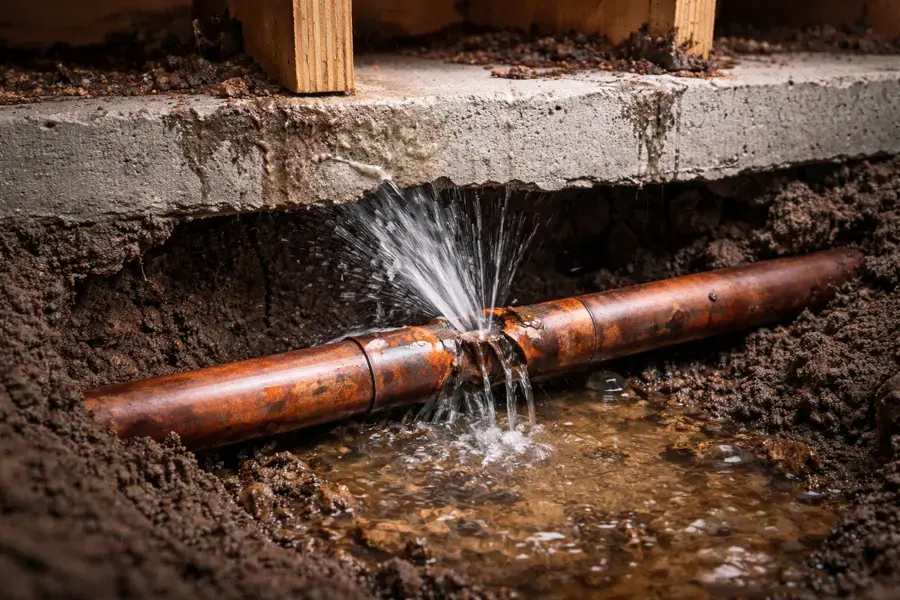 24/7 · Fremont
Slab Leak Water Damage at a glance in Fremont
First steps for slab leak water damage in Fremont
- 1
Check the meter
Turn off every fixture and watch whether the water meter keeps moving.
- 2
Shut the main
If the meter is moving, close the main valve and call a plumber.
- 3
Move belongings
Lift rugs, boxes and furniture off warm or damp floors.
- 4
Take photos first
Capture damp flooring, baseboards and the meter reading before any work.
A slab leak rarely announces itself. Warm spots on a floor, a meter that keeps turning with every fixture off or a damp baseboard are the usual clues. Once a plumber finds and repairs the leak, the cleanup is about getting water out of the flooring, the wall bottoms and the slab, and structural drying covers the rest.
Clues that point under the floor
- A warm patch on tile or hardwood
- Water bills that rise with no new use
- The sound of running water when everything is off
- Baseboards or carpet damp along one wall
- Flooring that lifts, cups or smells musty
What does slab leak water damage cost in Fremont, CA?
Slab leak cleanup in Fremont tends to cost between about $1,500 and $25,000. Tile or vinyl over a small wet area sits at the low end, while carpet or laminate across several rooms and a long-running leak cost the most.
Small area, tile or vinyl
$1,500 to $4,500
- Thermal mapping
- Baseboard removal
- Slab drying
Carpet or laminate rooms
$4,500 to $11,000
- Pad and laminate removal
- Wall bottom drying
- Cabinet toe kicks
Long-running, several rooms
$10,000 to $25,000
- Flooring removal across rooms
- Desiccant drying
- Extended monitoring
Ranges are typical, not a quote: category of water, square footage, material class and how fast drying started move the number most. Run the water damage cost calculator for a closer range.
The slab leak water damage process in Fremont, step by step
- 1
Read the slab
Thermal imaging and meters show where the water spread.
- 2
Remove what traps water
Wet carpet, pad and laminate come out, while tile may stay.
- 3
Dry the slab and walls
Dehumidifiers and air movers run on the concrete and wall bottoms.
- 4
Log and verify
Daily readings go in the file until the slab reads normal.
Finding the wet area
Thermal cameras and moisture meters show where heat or water has spread across the floor, which keeps removal limited to the affected rooms. The plumber locates the leaking pipe, and the readings show how far the water traveled before it was caught. Each reading is written down for the file.
Removing and drying
Carpet, pad and laminate over a wet slab do not dry in place, so they come out. Tile can often stay if the slab and grout dry properly. Dehumidifiers and air movers then work on the concrete and the wall bottoms until readings settle.
- Baseboards pulled to dry wall bottoms
- Cabinet toe kicks opened
- Desiccant units for dense slabs
Fremont notes
Foundation type is confirmed at the property, because every home differs. Fremont has a warm-summer climate, but drying equipment runs until the meters say stop, whatever the season. Wider details on pricing and process are on the main slab leak page.
Slab leak water damage across Fremont and nearby towns
Slab leak cleanup covers Fremont homes in Irvington, Centerville, Niles, Warm Springs and Mission San Jose, and ZIP codes 94536, 94537, 94538 and 94539, wherever the pipe sits beneath a concrete floor.
The same service nearby: slab leak water damage in Castro Valley, Hayward, San Leandro.
Related water damage services in Fremont
How is a slab leak found?
A plumber uses sound and pressure tests to locate the pipe, and the restoration crew uses thermal imaging and meters to see where water spread.
Does carpet over a wet slab have to go?
Usually. Carpet and pad hold water against the concrete, so they are removed, and the slab is dried before new flooring is installed.
Can tile stay in place?
Often it can. Tile and grout tolerate water better than carpet, and the slab beneath is dried through nearby openings or from the surface.
How long does slab drying take?
Concrete releases water slowly. Expect several days at minimum and longer for thick or dense slabs, with desiccant units used on stubborn ones.
Is a slab leak always a pipe problem?
The source is a pipe, but drying is a separate job. The plumber stops the leak, and the crew dries and documents the damage.
What will the adjuster ask for?
Dated photos, readings from the slab and walls, a record of removed flooring and the plumber's report on the failed pipe.
Dry the slab and the floors above it
Tell the crew about the warm spots, the meter and the affected rooms, and a mapping and drying plan will follow.
Castro Valley Water Damage Restoration · Castro Valley, CA