Slab Leak Water Damage in Hayward
When a pipe leaks beneath a concrete slab, the water shows up through flooring and wall bottoms. The Hayward crew images the wet area, removes damaged floor layers and dries the slab and walls.
(888) 774-9605Book Hayward slab leak drying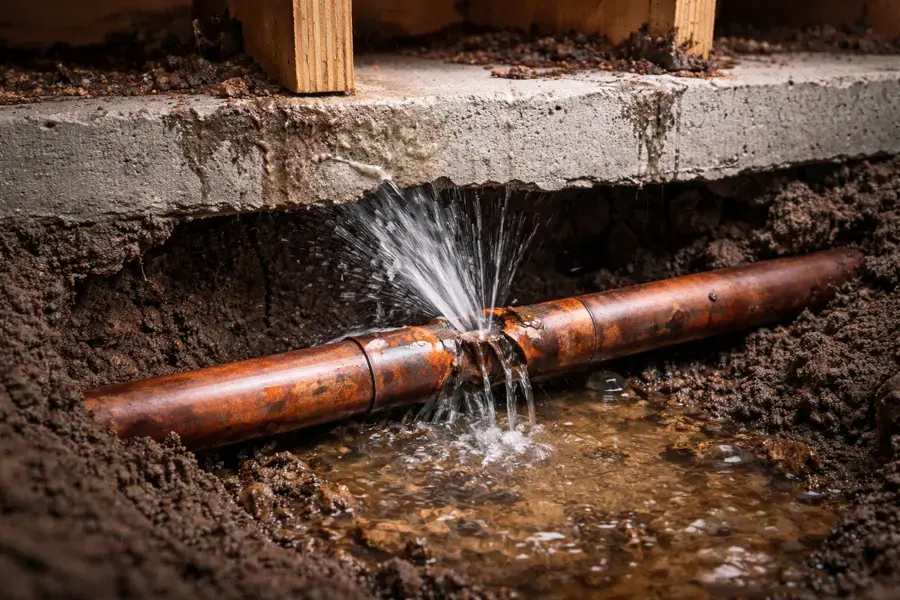 24/7 · Hayward
Slab Leak Water Damage at a glance in Hayward
First steps for slab leak water damage in Hayward
- 1
Shut off the water
Close the main valve and keep it off until a plumber has checked the pipe.
- 2
Check the floor
Feel for warm or damp spots and note any lifting flooring.
- 3
Photograph and mark
Take photos of damp spots and mark them for the crew.
- 4
Protect belongings
Move rugs and furniture off the damp area and onto dry blocks.
A slab leak happens when a pipe under or inside a concrete floor lets water escape. The signs are often a damp spot, lifting laminate, a musty smell or a water bill that does not make sense, and the crew deals with the water damage that results.
Reading the floor
Thermal imaging and a moisture meter map the wet area across the floor. The crew does not assume a foundation type for any Hayward home, so the slab is confirmed on site before work starts.
- Wet patches mapped before any material is lifted
- Flooring tested in rooms nearby
- Wall bottoms and cabinet bases probed
What does slab leak water damage cost in Hayward, CA?
Slab leak costs depend on the flooring involved and how long the water ran. Tile or vinyl areas dry with less removal, while carpet and laminate across rooms push both the price and the drying time higher.
Small area, tile or vinyl
$1,500 to $4,500
- Thermal mapping
- Baseboard removal
- Slab drying
Carpet or laminate rooms
$4,500 to $11,000
- Pad and laminate removal
- Wall bottom drying
- Cabinet toe kicks
Long-running, several rooms
$10,000 to $25,000
- Flooring removal across rooms
- Desiccant drying
- Extended monitoring
Ranges are typical, not a quote: category of water, square footage, material class and how fast drying started move the number most. Run the water damage cost calculator for a closer range.
The slab leak water damage process in Hayward, step by step
- 1
Image the slab
A thermal camera and meter show the wet footprint.
- 2
Remove wet layers
Flooring that traps moisture is lifted and baseboards come off.
- 3
Dry the slab
Dehumidifiers and air movers run on the floor and wall bottoms.
- 4
Log until dry
Readings continue until the slab and walls reach targets.
What comes out
Carpet, padding, laminate and any flooring that traps moisture are lifted. Baseboards are removed so the wall bottoms can breathe, and tile is left in place where it can be dried through the joints.
Drying the slab
Concrete releases water slowly, so dehumidifiers and air movers often run longer than for a wall leak. Readings are logged each visit, and a plumber's repair of the pipe is coordinated with the dry-out. See structural drying.
Flooring that tells the story
Different floors react differently to water below. Laminate lifts at the seams, carpet feels cool and damp, and vinyl can bubble or stain. Tile and grout often look fine while the slab underneath stays wet, which is why readings matter more than looks.
- Laminate seams that rise or gap
- Carpet that stays damp without a visible source
- Vinyl bubbles near walls or doorways
Each of these gets measured before it is lifted.
Slab leak water damage across Hayward and nearby towns
Slab leak calls cover Hayward ZIP codes 94541, 94542, 94544 and 94545, including Burbank, Tennyson/Alquire, Harder/Tennyson, Fairway Park and Longwood/Winton Grove, in single-family homes, condos and apartments.
The same service nearby: slab leak water damage in Castro Valley, San Leandro, Fremont.
Related water damage services in Hayward
How does a slab leak show up?
Common signs are a warm or damp floor, lifting laminate, a musty smell or a rising water bill. Moisture mapping confirms where the water has traveled. Mapping shows the real extent.
Does the crew fix the leaking pipe?
No. A plumber repairs the pipe, and the crew handles the extraction, drying and documentation around that repair.
Can the slab be dried in place?
Yes. Concrete holds moisture and dries slowly, so dehumidifiers and air movers run until readings reach dry reference levels. Slower drying is normal for slabs.
Do floors have to come out?
Carpet, pad and laminate usually do, while tile can stay when it dries through the joints. Baseboards come off so wall bottoms can dry.
Is the foundation type assumed in Hayward?
No. The crew confirms the floor and foundation on site, because homes differ and local records do not settle it. See water extraction if water is pooled.
Suspect a slab leak?
Tell the crew where the floor feels damp and what flooring is down, and they will explain how the area is mapped and dried.
Castro Valley Water Damage Restoration · Castro Valley, CA