Structural Drying in San Leandro
Once the standing water is gone, the walls, floors and framing are still wet. San Leandro properties get a moisture map, the right equipment and daily readings until every material tests dry.
(888) 774-9605Start the drying plan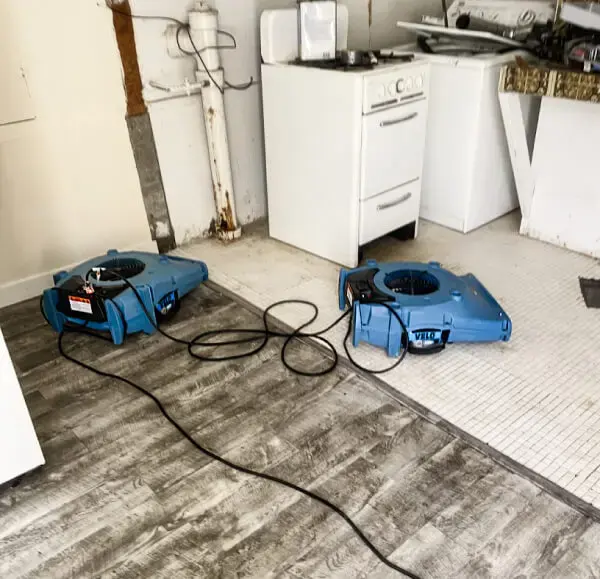 24/7 · San Leandro
Structural Drying and Dehumidification at a glance in San Leandro
First steps for structural drying and dehumidification in San Leandro
- 1
Keep it running
Do not switch off the dehumidifiers or air movers overnight.
- 2
Close the space
Keep doors and windows shut so the drying air stays inside.
- 3
Empty the tanks
Check any collection tanks if the dehumidifiers have them.
- 4
Stay clear of cords
Keep children and pets away from equipment.
Drying a building is a measured process, not a matter of running fans. Water sits inside wood, drywall and concrete, so the job is to move it into the air and then pull it out of the air, with readings that prove each step is working. Every reading is written down so the file holds proof of the work.
What the equipment does
- Air movers push dry air across wet surfaces
- LGR dehumidifiers pull moisture out of the air
- Floor mats draw water from hardwood
- Desiccant units handle dense or large losses
- Meters and thermal images track progress
What does structural drying and dehumidification cost in San Leandro, CA?
Structural drying in San Leandro runs from $1,500 for one or two rooms to $25,000 for large or dense losses, and the equipment count and days on site shape most of the price.
One or two rooms
$1,500 to $4,000
- Air movers and LGR
- Daily readings
- Three to five days
Several rooms or hardwood
$4,000 to $10,000
- Floor drying mats
- Multiple drying zones
- Crawl space equipment
Large or dense losses
$10,000 to $25,000
- Desiccant dehumidifiers
- Slab or whole-floor drying
- Extended monitoring
Ranges are typical, not a quote: category of water, square footage, material class and how fast drying started move the number most. Run the water damage cost calculator for a closer range.
The structural drying and dehumidification process in San Leandro, step by step
- 1
Map the moisture
Meter walls, floors and framing and record starting points.
- 2
Set the equipment
Place air movers and dehumidifiers to match the map.
- 3
Read every day
Log readings for each wet area and adjust equipment.
- 4
Release the area
Remove gear when readings reach the dry standard.
Setting up each room
A moisture map sets the starting readings on walls, floors and framing. Equipment is placed to match the map, with air movers aimed along wet surfaces and dehumidifiers sized to the volume of the room. Doors and windows stay closed to keep the drying air contained.
Storm and bay side losses
Wet season storms and a bay side location mean drying work in San Leandro often follows storm and canal side water. The standard does not change, but crawl spaces and wall bottoms get extra attention.
- Daily readings on every wet material
- Equipment moved as areas dry
- Final readings match the dry standard
How drying ends
Drying ends when readings reach the dry standard, not when a set number of days has passed. Stopping early leaves moisture in the framing, and within a 24 to 48 hour window mold can start in damp spots. The main structural drying page and the San Leandro hub have more.
Structural drying and dehumidification across San Leandro and nearby towns
Structural drying covers ZIP codes 94577, 94578 and 94579, from Downtown San Leandro and Bayfair to Washington Manor, Halcyon, Mulford Gardens and the neighborhoods along the marina, with equipment set up room by room.
The same service nearby: structural drying and dehumidification in Castro Valley, Oakland, Alameda.
Water damage restoration in San Leandro · every town covered
Related water damage services in San Leandro
How long does structural drying take?
It depends on the materials, the amount of water and the building. Dense materials like hardwood and concrete take longer, and daily readings show when drying is done.
Why are the machines so loud?
Air movers and dehumidifiers run continuously to keep moisture moving out of the building. The noise is the working part of the process.
Will drying raise my electric bill?
Yes, a little. The equipment draws power around the clock, and the documented run time can be shared with the insurance adjuster.
What is an LGR dehumidifier?
LGR stands for low grain refrigerant. These units pull more moisture from cool, damp air than a standard household dehumidifier.
How do you know when it is dry?
Readings from moisture meters on each wet material are compared with dry reference readings from a similar unaffected area.
Is drying needed if the floor looks dry?
Yes. Wood, drywall and insulation can hold water long after the surface looks fine, and that trapped moisture leads to swelling and odor.
Dry the structure, not just the floor
Tell the crew what got wet and when, and the plan sets out equipment, daily readings and the dry standard.
Castro Valley Water Damage Restoration · Castro Valley, CA